










Breaking News
 The AI Bird-Flu Scenario They Just Published
 Japan's first robot ambulance works the 9-1-1 lines for humanoids
 Cheap smartphone add-on pinpoints hidden cameras to shut down spies
 The $600 Tank That Beats a $10,000 Powerwall
Top Tech News
 Terrifying AI Behavior Even Its Creators Couldn't Explain
 WW3 Near-Miss? AI Hallucinated Nuclear Weapons Components Aboard Chinese Vessel Bound For Iran
 Stripe Is Building the Toll Road for the Machine Economy
 Toyota Dakar hopeful swaps twin-turbo V6 for hydrogen fuel cells
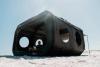 4-min turbo-inflatable cubic camp castle is now available in the USA
 Researchers Used Claude To Hack OpenAI Employee Accounts
 Chinese Scientists Develop New Oil Refining Method That Cuts Energy Use by 90%
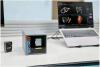 World's smallest CT scanner fits in the palm of your hand
 The Tesla Roadster will blow people's minds
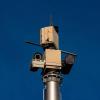 Peter Thiel-Funded Company Anduril to Triple the Number of Autonomous Surveillance Towers...



3D-Printing 'Glue Gun' Can Repair Bone Fractures During Surgery Filling-in the Gaps Around..
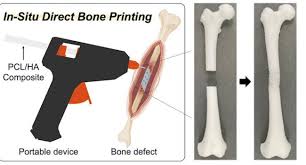
A new 3D printing "glue gun" can generate bone grafts directly onto fractures, using a revolutionary process that can fill-in the gaps around the site's jagged edges.
Now, the researchers in South Korea are preparing for human trials, having developed a tool made from a modified glue gun that can 3D-print bone grafts to repair defects during surgery.
Essentially, it quickly creates bone implants on the spot, without the need for making them in advance.
The researchers "optimized" the 3D-printed grafts until they exhibited high structural flexibility while releasing anti-inflammatory antibiotics and promoting natural bone regrowth at the grafting site—conforming to the jagged edges of a fracture.
Bone implants have previously been made of metal or donor bone or, more recently, 3D-printed material. But in cases involving more complex fractures the implants must be designed and produced prior to surgery to allow for appropriate fitting.
So, the scientists developed a new technology that offers a distinct approach: a printing system for use directly at the surgical site, that enables a "real-time fabrication and application of a scaffold," said study co-author Professor Jung Seung Lee, of Sungkyunkwan University in South Korea.
"This allows for highly accurate anatomical matching even in irregular or complex defects without the need for preoperative preparation such as imaging, modeling, and trimming processes."
What's in the 'glue'?
He explained that the material fed into the glue gun is a filament comprised of two major components: a feature of natural bone known to promote healing called hydroxyapatite (HA) and a biocompatible thermoplastic called polycaprolactone (PCL).
PCL can liquify in temperatures as low as 60 Celsius, which when applied with a heat-modified glue gun, is cool enough to prevent tissue damage during surgical application while being able to conform to the jagged grooves of fractured bone.