










Breaking News
 Americans Are Officially Out Of Money To Spend -- We Had To React
 Arizona reports several cyclosporiasis cases: What to know | FOX 10 Phoenix
 South Korea's AI Bubble Just Popped
 It's Not Just a New Jersey Scandal – SIX States Were Previously Caught Including THOUSANDS...
Top Tech News
 Anthropic is launching its own drug discovery programs for rare diseases using Claude...
 SpaceX AI Satellites Will Have 250 Kilowatts of Power
 Chinese researchers have developed a sodium-metal battery that can fully charge in just 4 minutes...
 SpaceX Starship Flight 13 in 3 Days - Thursday July 13
 Chinese Scientists Develop Nuclear Battery Using Carbon-14
 Teleoperated humanoid robots complete first-ever live surgery
 Floating capsule auto-disinfects water without chemicals or battery
 Modular Reactors To Solve Data Center Hysteria?
 DeepSeek Developing In-House AI Chip In Bid To Cut Nvidia Reliance
 America just took three brand-new nuclear reactors critical in thirty days, a first for any...



Elon Musk Says SpaceX Will Send People to Mars by 2025
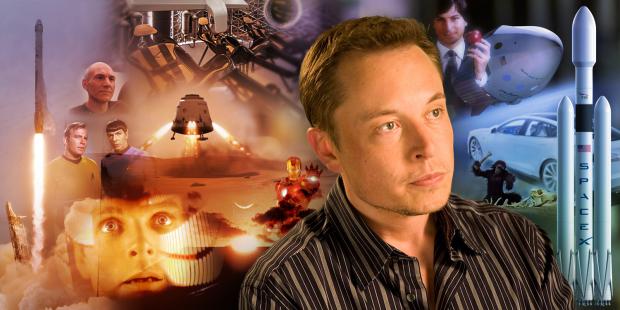
Nobody can accuse Elon Musk of not shooting for the stars.
The SpaceX and Tesla founder said this week that he personally wants to visit space within the next five years and thinks that his company will launch a mission to Mars by 2025.
Speaking at the StartmeupHK Festival in Hong Kong this week, Musk said that he had already taken parabolic flights to prepare for space, but had not done much else.
"I don't think it's that hard, honestly," he said. "It's not that hard to float around."
Embed
SpaceX Makes Historic Rocket Landing in Florida 2:16
Personal space travel ambitions aside, Musk also talked about how important it was for mankind to reach Mars. He said that SpaceX is planning to reveal its next-generation spacecraft at September's International Astronautical Conference in Guadalajara, Mexico.
That could be the next step toward eventually sending human beings to the Red Planet — something Musk said he thinks will happen by 2025. It's an ambitious goal considering that NASA's current plan is to send humans to Mars in the 2030s.