










Breaking News
 Still Discriminating
 Nike CEO may have just admitted the company went too woke as stock hits 12-year low
 Will Europe Be Annihilated Over Kaliningrad?
 The Last Asset--You Will Own Nothing
Top Tech News
 Most artificial limbs rely on silicone or plastic to mimic human hands.
 Flying cell tower beams phone signal to Japan from 10 miles up
 Chinese Commercial Reactor Achieves Nuclear Fusion with Clean Hydrogen-Boron Fuel
 Med Beds Just Took a MASSIVE Step Forward, Healing People in Days!
 Palmer Luckey: Autonomous Weapons Are Ancient and Why Anduril Won't Build Humanoids | EP #295
 A laser just photographed objects through six feet of concrete
 Elon Musk's Next-Gen Motor Destroy Entire EV Industry
 China's disputed satellite refueling heralds new space war era
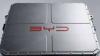 BYD Will Put Solid-State Batteries In An EV Next Year: Executive
 FDA-cleared exoskeleton puts spinal-cord patients back on their feet



Miniature fuel cell to keep drones aloft for over an hour and phones charged for a week

Simply adding more batteries, however, affects flight characteristics and reduces the load the drone can carry. To help solve this problem, researchers at the Pohang University of Science and Technology (Postech) have created a miniature fuel cell they claim not only provides enough energy to keep a drone in the sky for over an hour, but may well find applications in powering everything from smartphones to cars in the not-too-distant future.
Developed by Professor Gyeong Man Choi and his Ph.D. student Kun Joong Kim at Postech, the new solid oxide fuel cell (SOFC) is claimed by the researchers to be the first to use porous stainless steel in combination with thin-film electrolyte, all brought together using a technique known as tape casting-lamination-cofiring. Allied with electrodes of low heat capacity, this amalgamation not only results in increased performance, but also in higher long-term durability.