










Breaking News
 Americans Are Officially Out Of Money To Spend -- We Had To React
 Arizona reports several cyclosporiasis cases: What to know | FOX 10 Phoenix
 South Korea's AI Bubble Just Popped
 It's Not Just a New Jersey Scandal – SIX States Were Previously Caught Including THOUSANDS...
Top Tech News
 Anthropic is launching its own drug discovery programs for rare diseases using Claude...
 SpaceX AI Satellites Will Have 250 Kilowatts of Power
 Chinese researchers have developed a sodium-metal battery that can fully charge in just 4 minutes...
 SpaceX Starship Flight 13 in 3 Days - Thursday July 13
 Chinese Scientists Develop Nuclear Battery Using Carbon-14
 Teleoperated humanoid robots complete first-ever live surgery
 Floating capsule auto-disinfects water without chemicals or battery
 Modular Reactors To Solve Data Center Hysteria?
 DeepSeek Developing In-House AI Chip In Bid To Cut Nvidia Reliance
 America just took three brand-new nuclear reactors critical in thirty days, a first for any...



SpaceX fast-tracks Mars plans and shoots for 2018 launch of unmanned lander
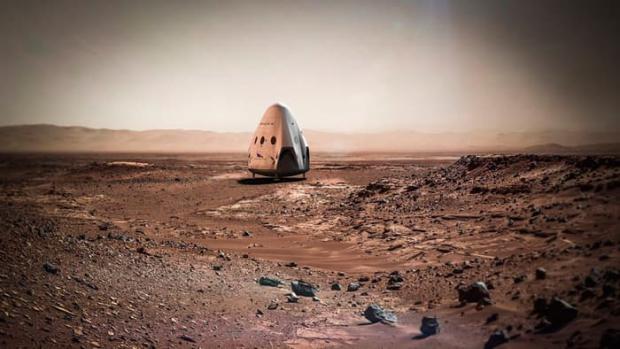
In any case, SpaceX has just announced plans to have one of its Dragon spacecraft on its way to the Red Planet as soon as 2018, four years earlier than anticipated.
NASA currently has unmanned rovers trawling the surface of Mars for signs of life, but if some of that red rock could be hauled back and prodded by scientists in fully equipped laboratories here on Earth the search may become more fruitful. NASA is preparing to send another rover to Mars in 2020 that will collect rock and soil samples, but the agency had no ironclad plan for how these might be returned to Earth.
Enter SpaceX and its unmanned Dragon capsule, which made history in 2012 as the first commercial spacecraft to carry cargo to the ISS and also return cargo to Earth. SpaceX had been at looking at modifying the Dragon spacecraft as an unmanned lander for the Martian surface, and last year this idea piqued the interest of NASA researchers.