










Breaking News
 Americans Are Officially Out Of Money To Spend -- We Had To React
 Arizona reports several cyclosporiasis cases: What to know | FOX 10 Phoenix
 South Korea's AI Bubble Just Popped
 It's Not Just a New Jersey Scandal – SIX States Were Previously Caught Including THOUSANDS...
Top Tech News
 Anthropic is launching its own drug discovery programs for rare diseases using Claude...
 SpaceX AI Satellites Will Have 250 Kilowatts of Power
 Chinese researchers have developed a sodium-metal battery that can fully charge in just 4 minutes...
 SpaceX Starship Flight 13 in 3 Days - Thursday July 13
 Chinese Scientists Develop Nuclear Battery Using Carbon-14
 Teleoperated humanoid robots complete first-ever live surgery
 Floating capsule auto-disinfects water without chemicals or battery
 Modular Reactors To Solve Data Center Hysteria?
 DeepSeek Developing In-House AI Chip In Bid To Cut Nvidia Reliance
 America just took three brand-new nuclear reactors critical in thirty days, a first for any...



The Age of the Hyperloop Has Arrived. (VIDEOS)
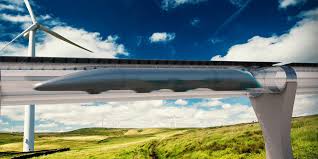
With a deep hum, linear induction motors spun up a powerful magnetic field along 200 feet of track in the Nevada desert. A shiny sled whizzed forward in a blur. Fifteen hundred pounds of aluminum reached 120 mph in just 1.5 seconds, accelerating to 300 mph before plowing into a sand berm.
Hyperloop works, you guys. Mostly. Kinda.
The transportation of tomorrow that billionaire rocketeer-automaker Elon Musk dreamed up in 2012 passed its first test Wednesday. Yes, this version would still turn any human passengers into meat jelly. But at least it flies.
"This was a major technology milestone," says Rob Lloyd, the CEO of Hyperloop One. More than that, it is a significant step toward his company's goal of sending people zooming through tubes before the decade is out.
Proponents of this outlandish idea say such a system will fundamentally change transportation, making neighbors of distant cities, rendering carbon-spewing trucks all but obsolete, and obviating the misery of air travel while sidestepping the political battles and massive cost associated with high-speed rail. (Yeah. Right.).
They call it the fifth great mode of transport—after the ship, the train, the automobile, and the airplane—and consider it every bit as revolutionary. "Hyperloop is faster, greener, safer, and cheaper than any other mode of transportation," Lloyd says.
Faster? Definitely. Greener and safer? Possibly. Cheaper? Theoretically. Of course, it's all academic. Beyond some snazzy images rendered with computers and complex equations scrawled on whiteboards, Hyperloop doesn't exist. Wednesday's test featured a test sled on a short stretch of rail.