










Breaking News
 Americans Are Officially Out Of Money To Spend -- We Had To React
 Arizona reports several cyclosporiasis cases: What to know | FOX 10 Phoenix
 South Korea's AI Bubble Just Popped
 It's Not Just a New Jersey Scandal – SIX States Were Previously Caught Including THOUSANDS...
Top Tech News
 Anthropic is launching its own drug discovery programs for rare diseases using Claude...
 SpaceX AI Satellites Will Have 250 Kilowatts of Power
 Chinese researchers have developed a sodium-metal battery that can fully charge in just 4 minutes...
 SpaceX Starship Flight 13 in 3 Days - Thursday July 13
 Chinese Scientists Develop Nuclear Battery Using Carbon-14
 Teleoperated humanoid robots complete first-ever live surgery
 Floating capsule auto-disinfects water without chemicals or battery
 Modular Reactors To Solve Data Center Hysteria?
 DeepSeek Developing In-House AI Chip In Bid To Cut Nvidia Reliance
 America just took three brand-new nuclear reactors critical in thirty days, a first for any...



India's reusable space shuttle tested successfully
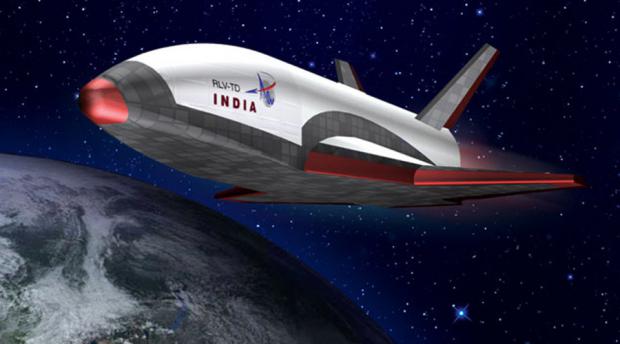
India has successfully test launched its first ever indigenously built reusable space shuttle — Re-Usable Launch Vehicle - technology demonstrator (RLV-TD).
The test took place Monday from Sriharikota island in southern Andhra Pradesh state.
The RLV technology was developed in an attempt to cut costs of launching satellites into space. Indian Space Research Organisation (ISRO) spent roughly rupees 1 billion ($19.5 million) to develop this technology.
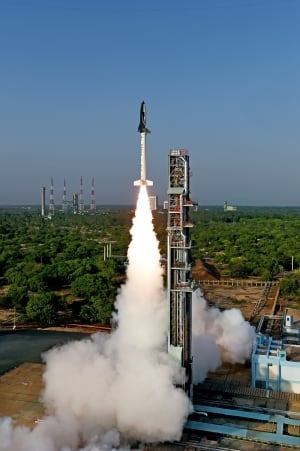
India's RLV-TD reusable spacecraft blasted off Monday in its first test, which was successful. (Indian Space Research Organisation)
The nine-metre-long rocket took off without a hitch from ISRO's rocket launch center at Sriharikota.
This test launch will enable scientists to gather data on autonomous landing, hypersonic speed and more.
The successful launch also puts India on an elite list of space-faring nations, including the United States, Japan and Russia, which have been using their own RLVs for years.
Prime Minister Narendra Modi took to Twitter to congratulate ISRO.
"Launch of India's first indigenous space shuttle RLV-TD is the result of the industrious efforts of our scientists. Congrats to them. The dynamism & dedication with which our scientists & @isro have worked over the years is exceptional and very inspiring," tweeted Modi.
The vehicle will be directed to plunge into the Bay of Bengal on its return to earth and won't be recovered this time.
However, in subsequent flights, scientists would attempt for it to touch down at a specific location on land.
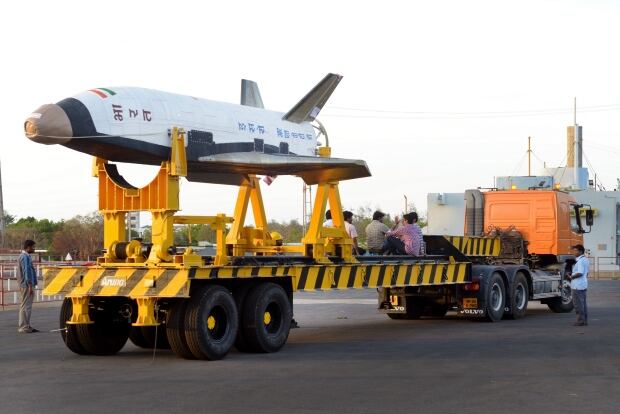
The RLV technology was developed in an attempt to cut costs of launching satellites into space. Indian Space Research Organisation (ISRO) spent roughly rupees 1 billion ($19.5 million) to develop this technology. (India Space Research Organisation)