










Breaking News
 EXCERPTS: Citigroup Inc. received approval to launch a wholly-owned securities business...
 The Crown Wants It Kept Secret: AG Asks the Federal Court to Seal Information...
 The Supreme Court Just Denied Your Constitutional Rights
 The state is trying to crush the Amish with ruinous penalties.
Top Tech News
 Modular phone promises total privacy at the flick of a switch
 Genetically Engineered War Dogs for 134 Pound Cyborg Dire Wolves Now – Later 600 Pound Wolves
 They're Quietly REPLACING Our Food With THIS… And Nobody Is Talking About It!
 Chicago Opens First "Teacher-Free" AI School as Global Push Accelerates
 Solar Panels Are Doing Something Nobody Expected
 DeLorean climbs skyward to race electric flying cars
 Atari's 800XL returns with a keyboard, cartridges and BASIC
 Bioinspired robot airdrops into remote waters via morphing wing-sail
 Anduril interceptor adapts to emerging threats via swappable stages
 I Built a Website to Expose Solar and Battery Scams


Off-grid flatpack cabins would assemble like Ikea furniture
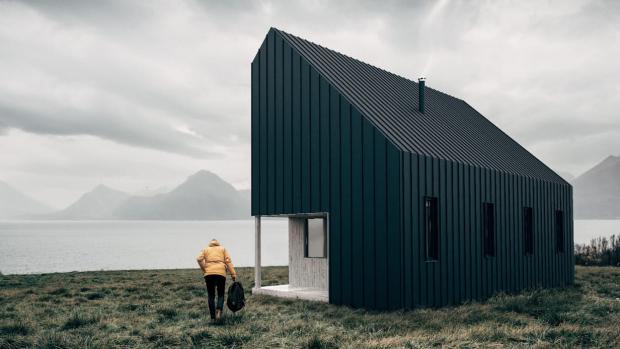
The cabins will come clad in a metal shell and be offered in several sizes. The smallest will measure just 191 sq ft (17 sq m) and sleep up to four people. The largest will come in at a palatial 937 sq ft (87 sq m) and sleep up to 24 people.
Inside, the cabins will include a lounge, kitchen, dining area, bathroom, and one or more bedrooms, spread over two floors. They will also be offered in two main configurations: Backcountry, which will allow full off-grid use in rural areas, and Frontcountry, which will be erected in semi-rural or built-up areas and serve as full-time homes.
The firm envisions the Backcountry models as being relatively utilitarian and outfitted with bunk beds, while the Frontcountry models would be a little more plush, reflecting their use as full-time homes.