










Breaking News
 This is the future we shall bring into being
 Elon Musk's Vision For The Future Looks Like A Movie
 Phosphorus Munitions Fired by Israel Burn Groves, Orchards in Southern Lebanon
 Iran's IRGC Warns It Will Expand 'Geography of the War' If the US Attacks Again
Top Tech News
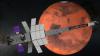 BEYOND THE MOON: NASA plans a nuclear-powered fleet to push DEEPER into space
 Big Oil Backs Mazama's $135 Million Bet On Superhot Geothermal
 Quantum compass takes flight on Northrop's Lumberjack drone
 Terrifying AI Behavior Even Its Creators Couldn't Explain
 WW3 Near-Miss? AI Hallucinated Nuclear Weapons Components Aboard Chinese Vessel Bound For Iran
 Stripe Is Building the Toll Road for the Machine Economy
 Toyota Dakar hopeful swaps twin-turbo V6 for hydrogen fuel cells
 4-min turbo-inflatable cubic camp castle is now available in the USA
 Researchers Used Claude To Hack OpenAI Employee Accounts
 Chinese Scientists Develop New Oil Refining Method That Cuts Energy Use by 90%



It's a Great Time to Be a Homeschooler
Our teaching approaches and learning philosophies vary. Our politics run the gamut and our visions of education reform differ greatly. Yet, despite these contrasts, homeschoolers are remarkably similar. I recently asked a large, eclectic group of homeschooling parents why they chose this education option for their children. Key homeschooling features like "freedom," and "time," and "flexibility," and "individualization" were common drivers for all.
When I first heard about homeschooling, it was 1998. I was a senior in college writing a research paper on education choice and the rising homeschooling movement, and became fascinated by this option. A college classmate of mine connected me with her family members who were homeschooling, and they invited me into their home to observe and ask questions. Of course my first question was: "What about socialization?"