










Breaking News
 Americans Are Officially Out Of Money To Spend -- We Had To React
 Arizona reports several cyclosporiasis cases: What to know | FOX 10 Phoenix
 South Korea's AI Bubble Just Popped
 It's Not Just a New Jersey Scandal – SIX States Were Previously Caught Including THOUSANDS...
Top Tech News
 Anthropic is launching its own drug discovery programs for rare diseases using Claude...
 SpaceX AI Satellites Will Have 250 Kilowatts of Power
 Chinese researchers have developed a sodium-metal battery that can fully charge in just 4 minutes...
 SpaceX Starship Flight 13 in 3 Days - Thursday July 13
 Chinese Scientists Develop Nuclear Battery Using Carbon-14
 Teleoperated humanoid robots complete first-ever live surgery
 Floating capsule auto-disinfects water without chemicals or battery
 Modular Reactors To Solve Data Center Hysteria?
 DeepSeek Developing In-House AI Chip In Bid To Cut Nvidia Reliance
 America just took three brand-new nuclear reactors critical in thirty days, a first for any...



Amazon building an app that matches truck drivers to shippers
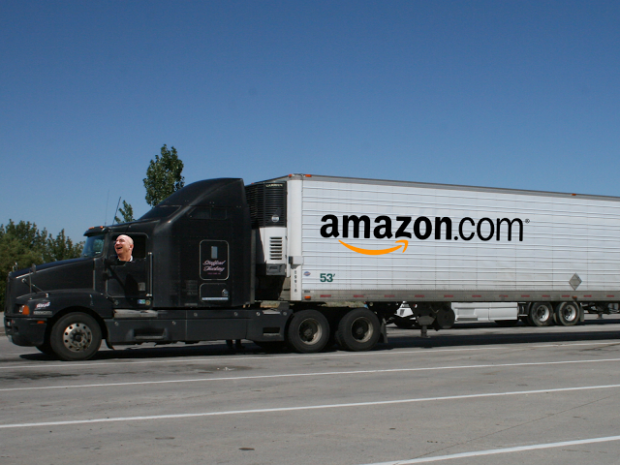
The app, scheduled to launch next summer, is designed to make it easier for truck drivers to find shippers that need goods moved, much in the way Uber connects drivers with riders. It would also eliminate the need for a third-party broker, which typically charges a commission of about 15% for doing the middleman work.
The app will offer real-time pricing and driving directions, as well as personalized features such as truck-stop recommendations and a suggested "tour" of loads to pick up and drop off. It could also have tracking and payment options to speed up the entire shipping process.
Amazon is considering creating its own fleet of air freight shippers to compete head-to-head with UPS, FedEx, and the USPS. A new report suggests that Amazon's logistics ambitions could be even grander than anyone realized.
Internal company documents obtained by Bloomberg suggest that Amazon senior management reviewed a proposal to create a global logistics and fulfillment infrastructure as far back as 2013. The internal proposal, dubbed Operation Dragon Boat, illustrates a worldwide delivery system that transports goods produced by third-party suppliers from places like India and China all the way to a hypothetical home in Atlanta. This idea spans the entire shipping life cycle from the first mile to the much detested "last mile."