










Breaking News
 This is the future we shall bring into being
 Elon Musk's Vision For The Future Looks Like A Movie
 Phosphorus Munitions Fired by Israel Burn Groves, Orchards in Southern Lebanon
 Iran's IRGC Warns It Will Expand 'Geography of the War' If the US Attacks Again
Top Tech News
 BEYOND THE MOON: NASA plans a nuclear-powered fleet to push DEEPER into space
 Big Oil Backs Mazama's $135 Million Bet On Superhot Geothermal
 Quantum compass takes flight on Northrop's Lumberjack drone
 Terrifying AI Behavior Even Its Creators Couldn't Explain
 WW3 Near-Miss? AI Hallucinated Nuclear Weapons Components Aboard Chinese Vessel Bound For Iran
 Stripe Is Building the Toll Road for the Machine Economy
 Toyota Dakar hopeful swaps twin-turbo V6 for hydrogen fuel cells
 4-min turbo-inflatable cubic camp castle is now available in the USA
 Researchers Used Claude To Hack OpenAI Employee Accounts
 Chinese Scientists Develop New Oil Refining Method That Cuts Energy Use by 90%



Spacex has successful launch and good landing of the first stage
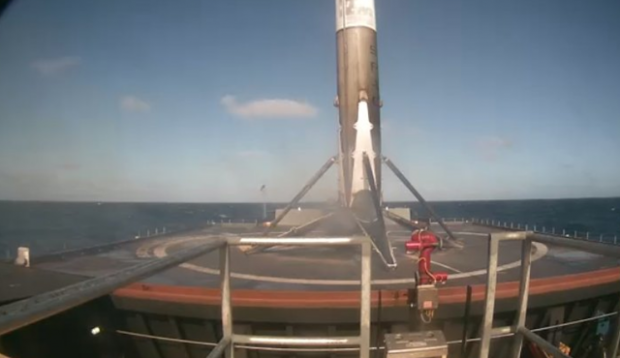
Over the next 14 months, the company plans six additional Falcon 9 launches to deploy 60 more Iridium satellites that will completely replace the constellation.
In the short-term, the successful launch helps put SpaceX back on track. The explosion and subsequent four-month grounding created a backlog of launches, including cargo missions for NASA to the International Space Station. September's explosion was SpaceX's second failure in 15 months; a Falcon 9 rocket carrying NASA cargo disintegrated in flight in June 2015
SpaceX hopes to launch its larger Falcon Heavy this spring. The Heavy, years behind schedule, would become the world's most powerful rocket since NASA retired the Saturn 5 more than 40 years ago.
SpaceX also plans to refly one of its recovered boosters this spring. By reusing instead of throwing away rocket boosters, SpaceX hopes to significantly reduce the cost of launches.