










Breaking News
 This is the future we shall bring into being
 Elon Musk's Vision For The Future Looks Like A Movie
 Phosphorus Munitions Fired by Israel Burn Groves, Orchards in Southern Lebanon
 Iran's IRGC Warns It Will Expand 'Geography of the War' If the US Attacks Again
Top Tech News
 BEYOND THE MOON: NASA plans a nuclear-powered fleet to push DEEPER into space
 Big Oil Backs Mazama's $135 Million Bet On Superhot Geothermal
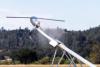 Quantum compass takes flight on Northrop's Lumberjack drone
 Terrifying AI Behavior Even Its Creators Couldn't Explain
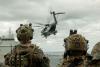 WW3 Near-Miss? AI Hallucinated Nuclear Weapons Components Aboard Chinese Vessel Bound For Iran
 Stripe Is Building the Toll Road for the Machine Economy
 Toyota Dakar hopeful swaps twin-turbo V6 for hydrogen fuel cells
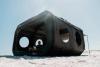 4-min turbo-inflatable cubic camp castle is now available in the USA
 Researchers Used Claude To Hack OpenAI Employee Accounts
 Chinese Scientists Develop New Oil Refining Method That Cuts Energy Use by 90%



In Flight Innovation: Charting What is Next for Aerospace

Marco Polo altered the course of human history with a three-and-a-half-year journey between Venice and Beijing. Today, the world is far smaller. On a commercial airline, one can travel between those two cities in half a day. Over the next 50 years, experts predict that innovations like AI pilots and advances in metal alloys will take the aerospace industry to entirely new heights.
Both futurists and engineers expect the flight experience to change significantly as engineers will find ways to carve out further efficiencies nose to tail.
Meanwhile, demand for air travel is expected to soar. According to the Federal Aviation Administration, air traffic over the next 20 years will increase 50 percent domestically and double globally. According to a professional services firm, much of this increase will be in emerging economies, especially India and China.
As a result, other types of flying machines, like personal flight drones, could become incredibly important, says Luke Haylock, Global Aerospace Technologist at Arconic, a global technology, engineering, and advanced manufacturing leader for major markets including aerospace.