










Breaking News
 This is the future we shall bring into being
 Elon Musk's Vision For The Future Looks Like A Movie
 Phosphorus Munitions Fired by Israel Burn Groves, Orchards in Southern Lebanon
 Iran's IRGC Warns It Will Expand 'Geography of the War' If the US Attacks Again
Top Tech News
 BEYOND THE MOON: NASA plans a nuclear-powered fleet to push DEEPER into space
 Big Oil Backs Mazama's $135 Million Bet On Superhot Geothermal
 Quantum compass takes flight on Northrop's Lumberjack drone
 Terrifying AI Behavior Even Its Creators Couldn't Explain
 WW3 Near-Miss? AI Hallucinated Nuclear Weapons Components Aboard Chinese Vessel Bound For Iran
 Stripe Is Building the Toll Road for the Machine Economy
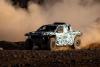 Toyota Dakar hopeful swaps twin-turbo V6 for hydrogen fuel cells
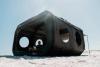 4-min turbo-inflatable cubic camp castle is now available in the USA
 Researchers Used Claude To Hack OpenAI Employee Accounts
 Chinese Scientists Develop New Oil Refining Method That Cuts Energy Use by 90%



Mars astronaut radiation shield set for moon mission trial-developer
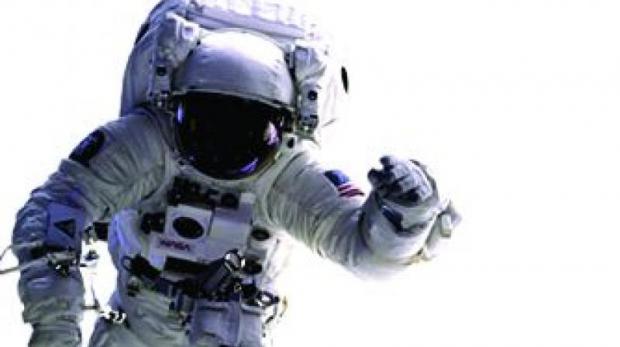
The AstroRad Radiation Shield has been devised by Tel Aviv-based StemRad, which has already produced and marketed a belt to protect rescue workers from harmful gamma ray radiation emitted in nuclear disasters, such as Chernobyl and Fukushima.
The vest will protect vital human tissue, particularly stem cells, which could be devastated by solar radiation in deep space or on Mars, whose sparse atmosphere offers no protection, StemRad's CEO Oren Milstein said.
U.S. space agency NASA has said it hopes to send astronauts to Mars in the mid-2030s.
The vest is made of layers that look like a contoured map and will be tailor-made for each astronaut. Non-metallic protective materials will be positioned on each shield to cover the organs of each astronaut.