










Breaking News
 Portable 1MW Kaleidos Microreactor Secures Critical Nuclear Fuel Deal Through 2030s
 Family Structure Determines Kids' Success In School More Than Race Or Income, Researchers Say
 Turkey & Israel On Brink Of Military Clash After Netanyahu Ordered Strikes On Syrian Airbase
 Georgia Refuses To Adopt EU Sanctions On Iran Citing 'National Interests'
Top Tech News
 High-voltage sodium home battery emerges as affordable rooftop solar solution
 Peter Thiel-Funded Company Anduril to Triple the Number of Autonomous Surveillance...
 China has released Origin Pilot, claimed to be the world's first open-source operating system...
 ShieldAI XBAT Drone Fighters Can Give A Fighter Drone Wing to Every US Destroyer
 Brain organoids, kept alive more than five years, matured like human brains
 Parkinson's patient's tremors VANISH within minutes of GROUNDBREAKING treatment
 Polaris injects pneumatic shifting into expedition-grade side-by-side
 NEW HOMES ARE BUILT WITH THIS AND IT'S MAKING YOU SICK
 S3E33: I Beat the Attorney General. No Lawyers. My Legal Team Was AI
 World's largest all-electric plane completes maiden flight


Scientists Say They've Figured Out How to Transcribe Your Thoughts From an MRI Scan
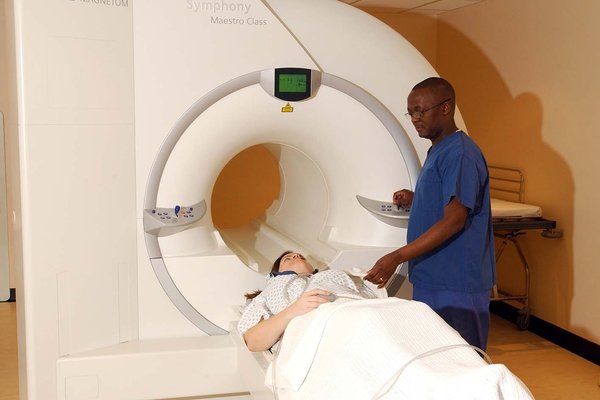
We're racing towards a future in which devices will be able to read our thoughts.
You see signs of it everywhere, from brain-computer interfaces to algorithms that detect emotions from facial scans. And though the tech remains imperfect, it's getting closer all the time: now a team of scientists say they've developed a model that can generate descriptions of what people's brains are seeing by simply analyzing a scan of their brain activity.
They're calling the technique "mind captioning," and it may represent an effective way for transcribing what someone's thinking, with impressively comprehensive and accurate results.
"This is hard to do," Alex Huth, coauthor of a new study in the journal Science Advances, and a computational neuroscientist at the University of California, Berkeley, told Nature. "It's surprising you can get that much detail."
The implications of such technology are a double-edged sword: on the one hand, it could give a voice to people who struggle speaking due to stroke, aphasia, and other medical difficulties, but on the other hand, it may threaten our mental privacy in an age when many other facets of our lives are surveilled and codified. But the team stress the model can't decode your private thoughts. "Nobody has shown you can do that, yet," Huth added.
The researchers' new technique relies on several AI models. To train them, first a deep language model analyzed the text captions in more than 2,000 short form videos, generating unique "meaning signature." Then another AI tool was trained on the MRI brain scans of six participants while they watched the same videos, matching the brain activity to the signatures.
Combined, the resulting brain decoder could analyze a new brain scan from someone watching a video and predict the meaning signature, while an AI text generator scoured for sentences that matched the predicted signature, creating dozens of candidate descriptions and refining them along the way.
While it sounds like an elaborate chain of guessing games, the results were remarkably descriptive and mostly on the money. According to Nature, by analyzing the brain activity of a participant who watched a video of someone jumping from the top of a waterfall, the AI model initially predicted the string "spring flow," refined that into "above rapid falling water fall" on the tenth guess, and finally landed on "a person jumps over a deep water fall on a mountain ridge" on the 100th guess.
Overall, the generated text descriptions achieved a 50 percent accuracy in identifying the correct video out of 100 possibilities. That's significantly higher than random chance, which would be around one percent, and impressive in the context of essentially divining coherent thoughts out of brain patterns.