










Breaking News
 Iran warns US of 'greater damage' as Trump rejects Hormuz reopening plan
 SOMETHING IS HAPPENING IN CALIFORNIA | DON'T MISS IT!
 They're Gonna Steal Your Savings to Force Digital Currency
 Julian Assange Is Back -- Here's What That Means
Top Tech News
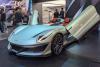 Tesla Model 3 killer charges from 10 to 97% in just 9 minutes
 World-first unpowered DNA computer sets speed record
 I Power 5 Buildings Off-Grid. Here's How
 The US government is pushing hard to get a working nuclear fission reactor into space by late 2028
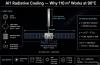 SpaceX Starmind AI in Space Radiator
 China Will Dominate Global Nuclear Energy Through 2035, Analyst Says
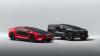 These Absolutely Wild-Looking EVs Are Saudi Arabia's First Homegrown Cars
 BEYOND THE MOON: NASA plans a nuclear-powered fleet to push DEEPER into space
 Big Oil Backs Mazama's $135 Million Bet On Superhot Geothermal
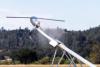 Quantum compass takes flight on Northrop's Lumberjack drone


The Future Of Air Travel? Meet The 150-Seat Wright Electric Airplane
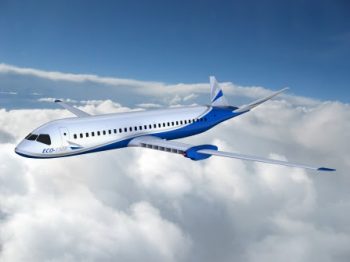
Wright's goal is to develop a 150-seat all-electric airplane with a 300 mile (nearly 500 km) range that would compete in the 737 style Boeing and Airbus plane market.
Both Boeing and Airbus sold nearly 1,000 of those planes in 2016 – and at around $90 million each, so there is huge potential in electrification.
"These short-haul trips make up 30 percent of all flights, and is a $26 billion market."
Wright already has a partner in British airline EasyJet, which could ultimately be the first to put such a plane into service.
Two scenarios were outlined by Wright. If the outfitted batteries are energy dense enough, the plane will be all-electric. If not, well there is always a range-extended option like Chevrolet Volt.
"Today Wright Electric gave its first preview to the world at Y Combinator's Demo Day, where Silicon Valley's most prestigious startup accelerator puts its new companies in front of investors. Wright Electric announced it's building a 150-seat plane to disrupt the 737 market. It's struck a partnership with budget British airline EasyJet, which could put its design in the air. And it even showed off its own electric plane in the parking lot.