










Breaking News
 Amazon Boeing Plane Bursts Into Flames After it Overshoots Runway at Miami International Airpot
 Trump grants clemency to 30 people, White House pardon czar says
 Bessent: "CUT THE SNAKE'S HEAD OFF"--But Who is the Real Target?
 Special LIVE Saturday Show: Could The Gov Seize XRP After Chilling FDIC Admission? Gas Prices...
Top Tech News
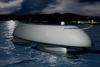 Floating data center would provide water and electricity to 32,000 homes
 OpenAI Cuts Off Elon's Cursor, Humanity's First Star Probe, and Trump's Nuclear Mars Shi
 Eating pollution? Plastic-to-cookie technology raises safety, environmental concerns
 Ford's $30,000 Fathom EV Truck Appears More Conventional Than Expected
 Berlin-based artist Simon Weckert explored that idea with Digital Camouflage...
 Tether expands tokenization business into Saudi Arabia, starting with real estate
 Ukraine is facing a new problem in its war with Russia:
 It charges more than it discharges while driving
 Dataminr AI tech to go live on NATO Maven system: CEO
  The Most Dangerous Interview Ever Recorded? PART 2


What it would actually take to get to Mars by 2020
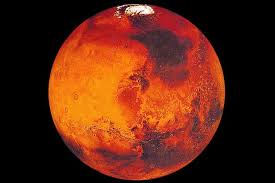
Today, during a phone call with astronaut Peggy Whitson on the International Space Station, President Trump joked that he hoped NASA would land astronauts on Mars by the end of his first term in 2020.
Obviously, this timeline is completely unreasonable for an agency that's already running behind on its plan to get to Mars by the 2030s. Getting to Mars is going to be incredibly difficult, with a lot of moving pieces that all need to fit together seamlessly.
Here's a to-do list of just some of the things NASA would need to get done by 2020:
Finish rocket. NASA's extremely powerful Space Launch System won't fly until late 2018 or early 2019. That wouldn't provide a lot of time for test flights before we'd use it to hurtle astronauts on their very long and hypothetical journey to the red planet in 2020.
Make sure no one's gonna die. The ride to Mars is probably going take six- to nine-months. That's a lot of time for a human body to suffer though weightlessness, which destroys our bones, and deep space radiation, which causes cancer and messes with our brains and possibly our hearts. Not to mention the risks of going bonkers from boredom.
Build space RV. Speaking of going bonkers, can you imagine spending several months crammed into this tiny spacecraft with your fellow astronauts? No, because the Orion capsule is meant for short trips. For longer trips—like, Journey to Mars long—astronauts are going to need a bigger habitat with radiation protection, life support systems, water recycling, food storage, and a working bathroom. NASA hasn't yet selected a design for the habitat, let alone started building one.