










Breaking News
 Amazon Boeing Plane Bursts Into Flames After it Overshoots Runway at Miami International Airpot
 Trump grants clemency to 30 people, White House pardon czar says
 Bessent: "CUT THE SNAKE'S HEAD OFF"--But Who is the Real Target?
 Special LIVE Saturday Show: Could The Gov Seize XRP After Chilling FDIC Admission? Gas Prices...
Top Tech News
 Floating data center would provide water and electricity to 32,000 homes
 OpenAI Cuts Off Elon's Cursor, Humanity's First Star Probe, and Trump's Nuclear Mars Shi
 Eating pollution? Plastic-to-cookie technology raises safety, environmental concerns
 Ford's $30,000 Fathom EV Truck Appears More Conventional Than Expected
 Berlin-based artist Simon Weckert explored that idea with Digital Camouflage...
 Tether expands tokenization business into Saudi Arabia, starting with real estate
 Ukraine is facing a new problem in its war with Russia:
 It charges more than it discharges while driving
 Dataminr AI tech to go live on NATO Maven system: CEO
  The Most Dangerous Interview Ever Recorded? PART 2


Watch SpaceX Relaunch a Commercial Cargo Capsule for the First Time
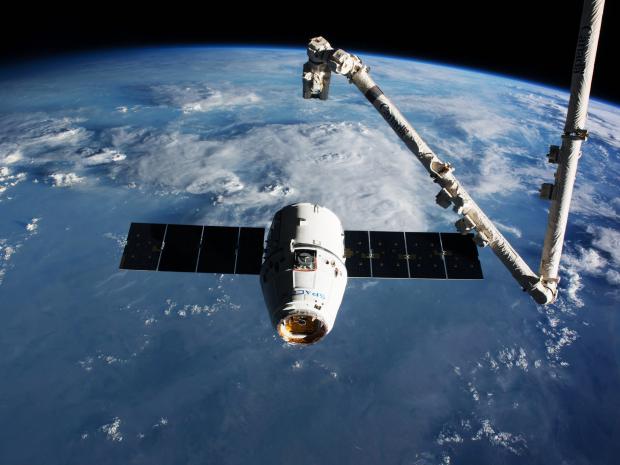
SpaceX wants to do it again. All of it: rocket boosters, fairings, payloads. The commercial space company has built its business model on reusability, and it has already proven its thrift with rockets: In March, Musk's moonshot marauders relaunched the first previously-used rocket … and re-landed it! Now, in a resupply launch destined for the International Space Station, it wants to send a (gently used) Dragon capsule back to space.
This capsule—originally launched in 2014—will carry about two and a half tons of gear, science, and personal effects to the astronauts and cosmonauts on the ISS. The mission's liftoff window opens at 5:55pm ET, and you can watch the livestream around 4:30pm ET. If SpaceX retrieves this capsule—it'll detach from the ISS in about a month, once the astronauts are done unloading it—it will do a lot to prove Musk's case that he can make a fully recyclable rocket.
Recycling is all about money. For most of us, that's money for beer at the end of the month. For Musk, it's money he saves every launch, which he uses to undersell his competitors, launch more rockets, and eke his way towards his goal of sending missions to Mars. Every Falcon 9 first stage he reuses saves him about $60 million. The Dragon capsules are probably worth less—but still, that's a lot of cases of beer.