










Breaking News
 Amazon Boeing Plane Bursts Into Flames After it Overshoots Runway at Miami International Airpot
 Trump grants clemency to 30 people, White House pardon czar says
 Bessent: "CUT THE SNAKE'S HEAD OFF"--But Who is the Real Target?
 Special LIVE Saturday Show: Could The Gov Seize XRP After Chilling FDIC Admission? Gas Prices...
Top Tech News
 Floating data center would provide water and electricity to 32,000 homes
 OpenAI Cuts Off Elon's Cursor, Humanity's First Star Probe, and Trump's Nuclear Mars Shi
 Eating pollution? Plastic-to-cookie technology raises safety, environmental concerns
 Ford's $30,000 Fathom EV Truck Appears More Conventional Than Expected
 Berlin-based artist Simon Weckert explored that idea with Digital Camouflage...
 Tether expands tokenization business into Saudi Arabia, starting with real estate
 Ukraine is facing a new problem in its war with Russia:
 It charges more than it discharges while driving
 Dataminr AI tech to go live on NATO Maven system: CEO
  The Most Dangerous Interview Ever Recorded? PART 2


Liftoff! SpaceX Nails Second Launch in Three Days
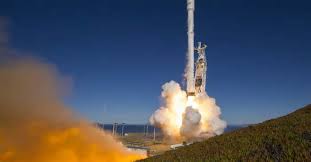
The 23-story tall booster lifted off from a fog-shrouded Pacific Coast launch pad at 1:25 p.m. local time (4:25 p.m. EDT/2025 GMT). The first stage separated as planned 2.5 minutes later, turned around and headed back toward a drone barge floating in the ocean.
Redesigned, larger grid fins, mounted near the top of the 14-story-tall first stage, helped guide the returning booster to a precision touchdown despite strong winds, marking the 13th time a SpaceX rocket has returned intact to Earth. Two of those rockets, including the one used to send Bulgaria's first communications satellite into orbit on Friday, had launched on previous missions, demonstrating the boosters' reusability.
SpaceX nailed its second launch in three days today (June 25) with liftoff of a Falcon 9 rocket from Vandenberg Air Force Base in California carrying 10 satellites owned by Iridium Communications.