










Breaking News
 Amazon Boeing Plane Bursts Into Flames After it Overshoots Runway at Miami International Airpot
 Trump grants clemency to 30 people, White House pardon czar says
 Bessent: "CUT THE SNAKE'S HEAD OFF"--But Who is the Real Target?
 Special LIVE Saturday Show: Could The Gov Seize XRP After Chilling FDIC Admission? Gas Prices...
Top Tech News
 Floating data center would provide water and electricity to 32,000 homes
 OpenAI Cuts Off Elon's Cursor, Humanity's First Star Probe, and Trump's Nuclear Mars Shi
 Eating pollution? Plastic-to-cookie technology raises safety, environmental concerns
 Ford's $30,000 Fathom EV Truck Appears More Conventional Than Expected
 Berlin-based artist Simon Weckert explored that idea with Digital Camouflage...
 Tether expands tokenization business into Saudi Arabia, starting with real estate
 Ukraine is facing a new problem in its war with Russia:
 It charges more than it discharges while driving
 Dataminr AI tech to go live on NATO Maven system: CEO
  The Most Dangerous Interview Ever Recorded? PART 2


Volvo Plans to Go Electric, to Abandon Conventional Car Engine by 2019
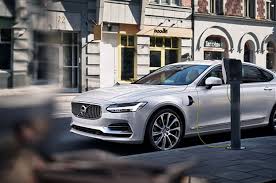
For Volvo the internal combustion engine has run its course.
In the face of competition from upstarts like Tesla Inc., which begins production this week of its new mass-market Model 3 electric battery-powered family car, the Chinese-owned automotive group on Wednesday said all new Volvo models from 2019 would be either fully electric or a hybrid.
Volvo is the first major auto maker to abandon the technology that has powered the industry for more than a century. Hakan Samuelsson, president and chief executive of Volvo Cars, said in a statement that the move "marks the end of the solely combustion engine-powered car," reiterating his target of selling one million electric cars and hybrids by 2025. "When we said it, we meant it. This is how we are going to do it."
Volvo also said it would launch five new electric and hybrid vehicles between 2019 and 2021. Two of the new models would be built by Polestar, the performance-car unit that Volvo is spinning off as a "separately branded electrified global high performance car company." Volvo Cars would build the other three models. No further details were available.
All major auto makers are preparing for a shift to electric vehicles, but the challenge for the industry is to get the timing right because of the industry's typically long product cycles that involve years of research and development before a vehicle rolls off the assembly line.
Auto executives talk about an impending "tipping point" when the costs of some electric car models are expected to fall below the cost of the conventional version of the same vehicle type. When that happens, industry executives and analysts say momentum could shift quickly in favor of electric cars.