










Breaking News
 This is the future we shall bring into being
 Elon Musk's Vision For The Future Looks Like A Movie
 Phosphorus Munitions Fired by Israel Burn Groves, Orchards in Southern Lebanon
 Iran's IRGC Warns It Will Expand 'Geography of the War' If the US Attacks Again
Top Tech News
 BEYOND THE MOON: NASA plans a nuclear-powered fleet to push DEEPER into space
 Big Oil Backs Mazama's $135 Million Bet On Superhot Geothermal
 Quantum compass takes flight on Northrop's Lumberjack drone
 Terrifying AI Behavior Even Its Creators Couldn't Explain
 WW3 Near-Miss? AI Hallucinated Nuclear Weapons Components Aboard Chinese Vessel Bound For Iran
 Stripe Is Building the Toll Road for the Machine Economy
 Toyota Dakar hopeful swaps twin-turbo V6 for hydrogen fuel cells
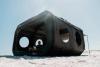 4-min turbo-inflatable cubic camp castle is now available in the USA
 Researchers Used Claude To Hack OpenAI Employee Accounts
 Chinese Scientists Develop New Oil Refining Method That Cuts Energy Use by 90%



Scientists remotely hacked a brain, controlling body movements
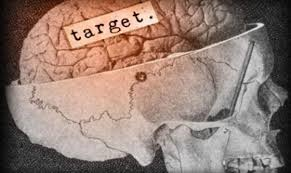
It's an incredibly scary thought, but scientists have managed to accomplish this science fiction nightmare for real, albeit on a much small scale, and they were even able to prompt their test subject to run, freeze in place, or even completely lose control over their limbs. Thankfully, the research will be used for good rather than evil… for now.
The effort, led by physics professor Arnd Pralle, PhD, of the University at Buffalo College of Arts and Sciences, focused on a technique called "magneto-thermal stimulation." It's not exactly a simple process — it requires the implantation of specially built DNA strands and nanoparticles which attach to specific neurons — but once the minimally invasive procedure is over, the brain can be remotely controlled via an alternating magnetic field. When those magnetic inputs are applied, the particles heat up, causing the neurons to fire.