










Breaking News
 Amazon Boeing Plane Bursts Into Flames After it Overshoots Runway at Miami International Airpot
 Trump grants clemency to 30 people, White House pardon czar says
 Bessent: "CUT THE SNAKE'S HEAD OFF"--But Who is the Real Target?
 Special LIVE Saturday Show: Could The Gov Seize XRP After Chilling FDIC Admission? Gas Prices...
Top Tech News
 Floating data center would provide water and electricity to 32,000 homes
 OpenAI Cuts Off Elon's Cursor, Humanity's First Star Probe, and Trump's Nuclear Mars Shi
 Eating pollution? Plastic-to-cookie technology raises safety, environmental concerns
 Ford's $30,000 Fathom EV Truck Appears More Conventional Than Expected
 Berlin-based artist Simon Weckert explored that idea with Digital Camouflage...
 Tether expands tokenization business into Saudi Arabia, starting with real estate
 Ukraine is facing a new problem in its war with Russia:
 It charges more than it discharges while driving
 Dataminr AI tech to go live on NATO Maven system: CEO
  The Most Dangerous Interview Ever Recorded? PART 2


China will launch a reusable spaceplane in 2020
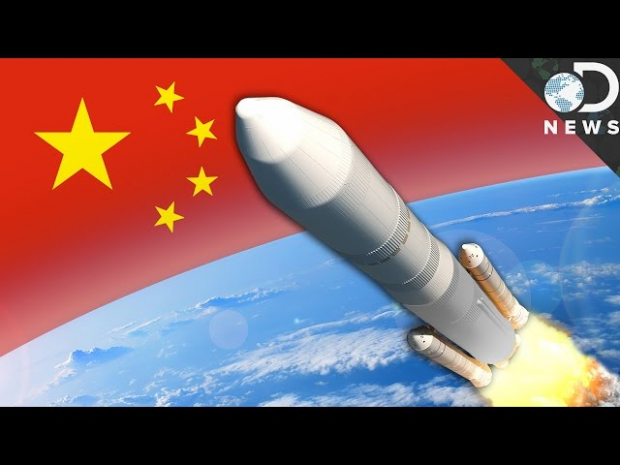
Unlike traditional one-off spacecraft, the new spacecraft will fly into the sky like an aircraft, said Chen Hongbo, a researcher from the corporation.
The spacecraft can transport people or payload into the orbit and return to Earth.
Chen said that the spacecraft will be easier to maintain and can improve the frequency of launches at lower cost, bringing new opportunities for more people to travel into space.
"Currently, China is developing its own reusable earth-to-orbit space vehicles that can take off and land horizontally. They have already finished several crucial ground tests for engines and [other key components], yielding remarkable achievements," Liu Shiquan, vice director of the China Aerospace Science & Industry Corporation (CASIC), told media at the Global Space Exploration Conference in Beijing.