










Breaking News
 EXCERPTS: Citigroup Inc. received approval to launch a wholly-owned securities business...
 The Crown Wants It Kept Secret: AG Asks the Federal Court to Seal Information...
 The Supreme Court Just Denied Your Constitutional Rights
 The state is trying to crush the Amish with ruinous penalties.
Top Tech News
 Genetically Engineered War Dogs for 134 Pound Cyborg Dire Wolves Now – Later 600 Pound Wolves
 They're Quietly REPLACING Our Food With THIS… And Nobody Is Talking About It!
 Chicago Opens First "Teacher-Free" AI School as Global Push Accelerates
 Solar Panels Are Doing Something Nobody Expected
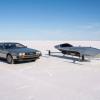 DeLorean climbs skyward to race electric flying cars
 Atari's 800XL returns with a keyboard, cartridges and BASIC
 Bioinspired robot airdrops into remote waters via morphing wing-sail
 Anduril interceptor adapts to emerging threats via swappable stages
 I Built a Website to Expose Solar and Battery Scams
 Whistleblower Issues Dire Warning: Rogue AI, Hacking Nuclear Programs...



Ukraine is facing a new problem in its war with Russia:

This makes the terminology increasingly important. In terms of their characteristics, jet-powered "Shaheds" are already closer to cruise missiles than conventional UAVs. The question is what to call them: "light cruise missiles," "mobilization cruise missiles," or something else.
But the threat remains the same.
Russia's "Geran-5," for example, reportedly has a launch weight of around 800 kg, a warhead of up to 90 kg, a range of up to 900 km and a speed of around 600 km/h.
If a weapon has a threat level comparable to a cruise missile, it is also correspondingly harder to intercept.
What Kyiv has faced over the past several days can therefore be viewed as a massive and prolonged barrage involving a new class of jet-powered strike weapons, currently referred to as "jet-powered Shaheds."
If the figures of 1,500 jet-powered UAVs launched last month and 2,500 this month are accurate, the scale is already comparable to historical campaigns involving mass use of relatively cheap cruise weapons.
During World War II, Germany launched approximately 8,000 V-1 flying bombs against Britain over roughly nine months.
But this is not a "one-way street."
According to Janes, as of June 2026, Ukraine had already conducted around 7,000 launches of jet-powered UAVs/cruise missiles of the Bars family in various configurations.
Ukraine is not simply trying to survive a new class of Russian weapons. We are also developing our own ability to respond with similar systems.
But that requires more than simply "reconfiguring" the civilian sector.
If jet engines are needed by the thousands, someone has to manufacture them — along with airframes, electronics, navigation systems, warheads, fuel and dozens of other components.
The next stage of this war is therefore not just about technology.
It is about resources and economic priorities.
To withstand Russian attacks while expanding our own strike capabilities, Ukraine will have to direct an increasing share of its resources toward defense production.
Because thousands of jet engines are not going to manufacture themselves.