










Breaking News
 Amazon Boeing Plane Bursts Into Flames After it Overshoots Runway at Miami International Airpot
 Trump grants clemency to 30 people, White House pardon czar says
 Bessent: "CUT THE SNAKE'S HEAD OFF"--But Who is the Real Target?
 Special LIVE Saturday Show: Could The Gov Seize XRP After Chilling FDIC Admission? Gas Prices...
Top Tech News
 Floating data center would provide water and electricity to 32,000 homes
 OpenAI Cuts Off Elon's Cursor, Humanity's First Star Probe, and Trump's Nuclear Mars Shi
 Eating pollution? Plastic-to-cookie technology raises safety, environmental concerns
 Ford's $30,000 Fathom EV Truck Appears More Conventional Than Expected
 Berlin-based artist Simon Weckert explored that idea with Digital Camouflage...
 Tether expands tokenization business into Saudi Arabia, starting with real estate
 Ukraine is facing a new problem in its war with Russia:
 It charges more than it discharges while driving
 Dataminr AI tech to go live on NATO Maven system: CEO
  The Most Dangerous Interview Ever Recorded? PART 2


Electric Lamborghini Terzo Millennio Houses Battery In Body, Sports 4 In-Wheel Motors
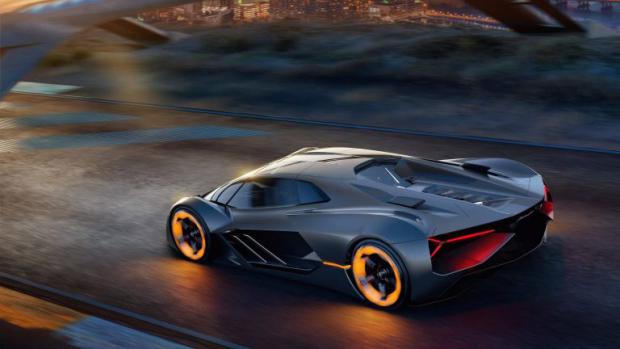
Smack in the middle of congested Boston, Massachusetts is far from where I imagine myself when I think about hanging out with the Lamborghini team. But however far the campus of the Massachusetts Institute of Technology may be from a mountain road or a race track, today, the future of fast cars lives here.
The Italian supercar company has partnered with some very smart folks at MIT, and the result is an all-new, wildly innovative concept car, called Terzo Millennio. Italian for "Third Millennium," the electrically propelled machine would seem to point the way forward for Lamborghini design and engineering. In fact, chairman and CEO of Lamborghini, Stefano Domenicali, called the collaboration, "an important page in the future of the super sports car for the third millennium."
Let's get one thing straight right away, though, about that third millennium bit. The term is code for tech and design that could come to fruition in the distant future… not the next generation of Lamborghini. More on this in a bit.
The automaker has partnered with MIT for the development of advanced energy storage systems, as well as to push the envelope in terms of material science. Specifically, Professor Mircea Dinca from MIT's Department of Chemistry and Professor Anastasios John Hart from the Department of Mechanical Engineering have lead the charge, along with Lamborghini's R&D pros.