










Breaking News
 EXCERPTS: Citigroup Inc. received approval to launch a wholly-owned securities business...
 The Crown Wants It Kept Secret: AG Asks the Federal Court to Seal Information...
 The Supreme Court Just Denied Your Constitutional Rights
 The state is trying to crush the Amish with ruinous penalties.
Top Tech News
 Modular phone promises total privacy at the flick of a switch
 Genetically Engineered War Dogs for 134 Pound Cyborg Dire Wolves Now – Later 600 Pound Wolves
 They're Quietly REPLACING Our Food With THIS… And Nobody Is Talking About It!
 Chicago Opens First "Teacher-Free" AI School as Global Push Accelerates
 Solar Panels Are Doing Something Nobody Expected
 DeLorean climbs skyward to race electric flying cars
 Atari's 800XL returns with a keyboard, cartridges and BASIC
 Bioinspired robot airdrops into remote waters via morphing wing-sail
 Anduril interceptor adapts to emerging threats via swappable stages
 I Built a Website to Expose Solar and Battery Scams


Heating and ventilating a 10,000 person space station
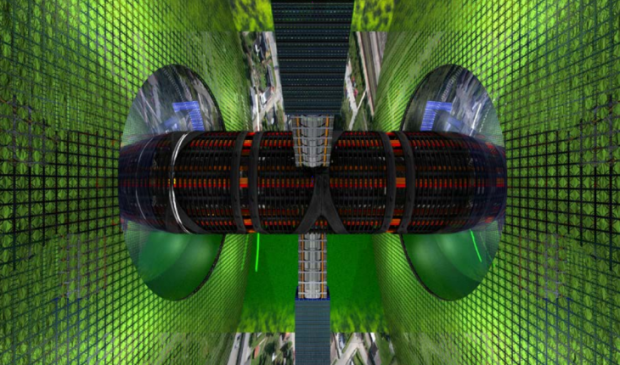
This allows a more detailed analysis than was possible in most theoretical precursor studies and enables comparison and validation of aspects of the design with the International Space Station, McMurdo Station in Antartica, Biosphere 2 and the Stanford Torus and Kalpana designs.
Above – Interior view showing end-cap greenhouses and window rings surrounding the hub air-duct. Transfer shafts within the tower blocks connect to "ground level" urban areas separated by farms.
The biggest lighting challenge within a large open space habitat is to illuminate the interior to a level commensurate with human comfort and wellbeing and sufficient for food crops without generating unmanageable amounts of waste heat.