










Breaking News
 No Benefits: Why Most Americans Hate The Idea Of AI Data Centers
 Are America's Youth Really Embracing Socialism?
 Are We About to See a Foreclosure WAVE Hit the US Housing Market?
 They Rolled Out the Relics - Then Cut the Working-Lands Money
Top Tech News
 World's smallest CT scanner fits in the palm of your hand
 The Tesla Roadster will blow people's minds
 Peter Thiel-Funded Company Anduril to Triple the Number of Autonomous Surveillance Towers...
 Quantum computing may soon become part of the microscope itself.
 Volkswagen Just Unveiled The Most Efficient EV Ever Tested
 NASA Super Light Solar Sail Project Will Be 12-40 Times Lighter and Faster
 Space Telescope Interferometer to Image Exoplanet Continents
 Twenty-five years of "temporary": how 9/11 built a surveillance state Americans never vote
 I'll Never Buy Another WALMART Battery!
 Shoei GT-Air 3 Smart helmet drops with built-in AR for $1,500



Smart glasses design projects images right into the eye
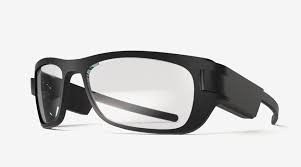
For now, this is theoretical and somewhat limited in scope. A prototype based on these methods would be capable of rendering texts and icons only. Projecting video into the eye wouldn't be possible at this stage.
"Rather than starting with a display technology and trying to make it as small as possible, we started with the idea that smart glasses should look and feel like normal glasses," research team leader Christopher Martinez of technology research institute Leti explains in a press release. "Developing our concept required a great deal of imagination because we eliminated the bulky optical components typically required and instead use the eye itself to form the image.
"We don't bring an image to the surface of the glass, but instead bring information that is emitted in the form of photons to make the image in the eye."