










Breaking News
 Socialism Is Pure Inefficiency
 Monday War Room Live: Israel Moves Against Christians In West Bank, As False Flag...
 Podcast – Shannon Joy – From Deplatformed to Defiant: Building Local Resistance Networks
 Jersey Shore Residents Step Up Fight To Keep Verizon 5G Towers Off Beachfront
Top Tech News
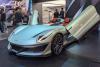 Tesla Model 3 killer charges from 10 to 97% in just 9 minutes
 World-first unpowered DNA computer sets speed record
 I Power 5 Buildings Off-Grid. Here's How
 The US government is pushing hard to get a working nuclear fission reactor into space by late 2028
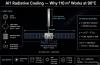 SpaceX Starmind AI in Space Radiator
 China Will Dominate Global Nuclear Energy Through 2035, Analyst Says
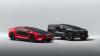 These Absolutely Wild-Looking EVs Are Saudi Arabia's First Homegrown Cars
 BEYOND THE MOON: NASA plans a nuclear-powered fleet to push DEEPER into space
 Big Oil Backs Mazama's $135 Million Bet On Superhot Geothermal
 Quantum compass takes flight on Northrop's Lumberjack drone


The World in one hour - 3000 SpaceX BFRs by 2045

Instead the US could buy a fleet of 3000 SpaceX BFRs. Spacex BFRs will be completely reusable rockets. They have the potential of flying hypersonically anywhere in the world ten times per day.
What would a nation rather have? 355 ship navy or 285 ship navy and 3000 SpaceX BFR.
3000 SpaceX BFR would not only convey more military capability it would transform the world with hypersonic flight. Moving people and cargo anywhere in the world in less than one hour.
Each BFR has 38 Raptor engines. Raptor engines are the same size and will be similar in price to Merlin engines. Merlin engines are about $6 million each. Ballpark pricing for a BFR should be about $250 million each. 3000 SpaceX BFR would cost about $750 billion. Volume production would bring the price down to about $200-400 billion.
SpaceX rocket engine factory can make about 400 engines per year or enough for about 10 BFR per year. There would need to be about ten to twenty times the current SpaceX engine factory.
In 2017, the US had about 7300 commercial passenger jets.
Chinese airlines are likely to buy more than 7,000 planes worth $1.1 trillion over the next 20 years.