










Breaking News
 Debt: The First Five Thousand Years by David Graeber
 How a solar farm in the Gobi Desert created a new ecosystem
 HOA seizes man's $450K home over $977 debt - and sells it for just $8K
 ISRAEL has taken over iPhone
Top Tech News
 Quantum computing may soon become part of the microscope itself.
 Volkswagen Just Unveiled The Most Efficient EV Ever Tested
 NASA Super Light Solar Sail Project Will Be 12-40 Times Lighter and Faster
 Space Telescope Interferometer to Image Exoplanet Continents
 Twenty-five years of "temporary": how 9/11 built a surveillance state Americans never vote
 I'll Never Buy Another WALMART Battery!
 Shoei GT-Air 3 Smart helmet drops with built-in AR for $1,500
 AI Whistleblower Tells Tucker How AI Could Kill All Humans by 2040
 You Hate Flock? Well There's More...
 Will Spiking Diesel Prices Drive Autonomous Trucking?



The world's first genderless AI voice is here. Listen now
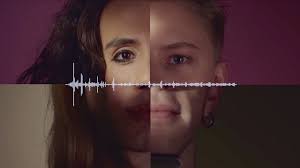
Voice assistants like Apple's Siri and Amazon's Alexa are women rather than men. You can change this in the settings, and choose a male speaker, of course, but the fact that the technology industry has chosen a woman to, by default, be our always-on-demand, personal assistant of choice, speaks volumes about our assumptions as a society: Women are expected to carry the psychic burden of schedules, birthdays, and phone numbers; they are the more caregiving sex, they should nurture and serve. Besides, who wants to ask a man for directions? He'll never pull over at a gas station if he's lost!
But what many people–myself included–have missed in the gender criticism of personal assistants is that it was even binary to begin with, as so much of the world identifies outside that schema. This oversight is exactly what Q is trying to fix. Q claims to be the world's first genderless voice for AI systems developed by the creative studio Virtue Nordic and the human rights festival Copenhagen Pride, in conjunction with social scientist Julie Carpenter. The project had no client; it was born from a design exploration inside Virtue Nordic and snowballed from there.
To its creators, Q solves a very real problem that happens when technology fails to represent everyone. "Based on what we know about some other technologies that are communication mediums, we do understand that social representation–or omission of social representation in media–is important in influencing social values," writes Carpenter over email. "There is a circle of influence between society, the people who develop the technology and people using the technology…" In other words, because Siri cannot be gender neutral, she reinforces a dated tradition of gender norms.