










Breaking News
 When Systems Fail, Seeds Prevail
SEMI-NEWS/SEMI-SATIRE: October 4, 2026 Edition
 Russia warns NATO of a possible nuclear response if Kaliningrad exclave is cut off | DW News
 Now They're REALLY Mad
Top Tech News
 Med Beds Just Took a MASSIVE Step Forward, Healing People in Days!
 Palmer Luckey: Autonomous Weapons Are Ancient and Why Anduril Won't Build Humanoids | EP #295
 A laser just photographed objects through six feet of concrete
 Elon Musk's Next-Gen Motor Destroy Entire EV Industry
 China's disputed satellite refueling heralds new space war era
 BYD Will Put Solid-State Batteries In An EV Next Year: Executive
 FDA-cleared exoskeleton puts spinal-cord patients back on their feet
 Your Robotic Vacuum Is Watching You -- Could It Someday Testify Against You in Court?
 Why Unigrid's Sodium-Ion Batteries Are the Game-Changer for Off-Grid Energy Storage
 This Battery On Wheels Makes Any Diesel Truck Electric In 5 Minutes



Linear Labs Present The HET, A Revolutionary Direct-Drive Motor
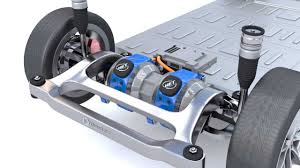
It seems electric motors just needed a push to present amazing technical developments. And that this push came from electric cars. Now we see new concepts fairly often, such as the Magnax motor or the plastic electric motor showed recently and this one, which comes from Texas and Linear Labs. It is called HET, or Hunstable Electric Turbine. And it claims to offer at least two times more torque density than the current top permanent magnet motors in the market.
That is just for starter. Linear Labs also states it has three times more power density and delivers 10 percent more range. The engine would also use 30 percent less copper. And that happens precisely due to the advantages the new motor design offers, according to the company.
Linear Labs calls the HET a "3-dimensional circumferential flux 4 rotor machine". That begins to explain the differences it has from a regular motor. First of all, it uses four rotors instead of just one or two.
In other words, "the structure of the HET ensures that all of the magnetic field interactions are fully involved in the production of torque", according to the company. And that makes it much more efficient at lower RPMs than a regular motor.
What is really innovative about this engine is that, when it needs more power and higher RPMs, it just uses an "electronic transmission" to generate that without losses. And that happens precisely due to the additional rotors.