










Breaking News
 No Benefits: Why Most Americans Hate The Idea Of AI Data Centers
 Are America's Youth Really Embracing Socialism?
 Are We About to See a Foreclosure WAVE Hit the US Housing Market?
 They Rolled Out the Relics - Then Cut the Working-Lands Money
Top Tech News
 World's smallest CT scanner fits in the palm of your hand
 The Tesla Roadster will blow people's minds
 Peter Thiel-Funded Company Anduril to Triple the Number of Autonomous Surveillance Towers...
 Quantum computing may soon become part of the microscope itself.
 Volkswagen Just Unveiled The Most Efficient EV Ever Tested
 NASA Super Light Solar Sail Project Will Be 12-40 Times Lighter and Faster
 Space Telescope Interferometer to Image Exoplanet Continents
 Twenty-five years of "temporary": how 9/11 built a surveillance state Americans never vote
 I'll Never Buy Another WALMART Battery!
 Shoei GT-Air 3 Smart helmet drops with built-in AR for $1,500



SPOT ON Can you spot which moles are deadly? The skin cancer signs you need to know
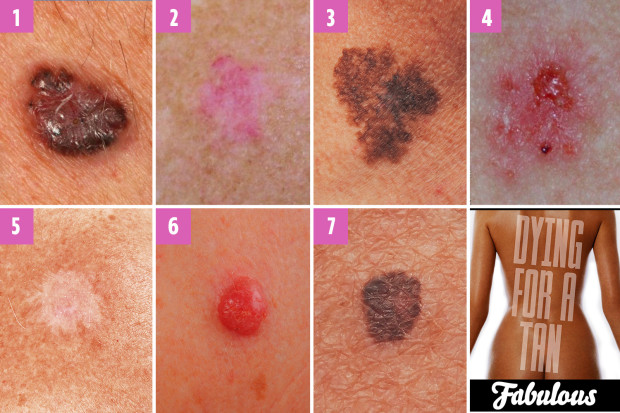
IT'S the most common form of cancer in the UK - killing seven Brits every day.
But, would you know if you were developing skin cancer? Can you tell the dangerous moles from the harmless?
Which of the above moles would you worry about, and which would you ignore?
To find the answer, scroll down to the box below - and then learn how to spot each type.
Millions of Brits are putting their lives at risk, with one-in-ten Brits - including kids as young as eight - using sunbeds.
Doing so before the age of 35 increases your chance of developing melanoma - the deadliest form of skin cancer - by a horrific 87 per cent.
That's why Fabulous launched the Dying For A Tan campaign, to raise awareness of the dangers sunbeds pose.
Despite the risks, many Brits are still clueless when it comes to spotting the signs of skin cancer - dismissing changes to moles, and new blemishes as harmless.
Caught early, skin cancer has a good survival rate - 90 per cent if the disease is detected at stage one.
And experts estimate 86 per cent of cases are preventable.
SPOT THE DANGER MOLE
ALL the moles and blemishes pictured above are cancerous.
Some show deadly melanoma, while others are signs of more treatable forms of the disease.
Basal cell carcinoma (BCC)
BCC on the trunk
Malignant melanoma on the neck
BCC on the trunk
BCC on the shoulder
Mixed melanoma
Malignant spreading melanoma
The most common sign of skin cancer is a change to a mole, freckle or normal patch of skin.
Here, we share the symptoms you need to know - to spot the signs of the three most common skin cancers.

Read More...