










Breaking News
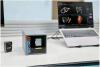 World's smallest CT scanner fits in the palm of your hand
 Next Issue Of The Wild Bunch: How To Survive With The Bare Minimum
 5 Signs You Have Parasites
  How Committed Are the Republicans to War?
Top Tech News
 Quantum computing may soon become part of the microscope itself.
 Volkswagen Just Unveiled The Most Efficient EV Ever Tested
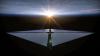 NASA Super Light Solar Sail Project Will Be 12-40 Times Lighter and Faster
 Space Telescope Interferometer to Image Exoplanet Continents
 Twenty-five years of "temporary": how 9/11 built a surveillance state Americans never vote
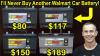 I'll Never Buy Another WALMART Battery!
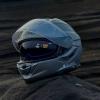 Shoei GT-Air 3 Smart helmet drops with built-in AR for $1,500
 AI Whistleblower Tells Tucker How AI Could Kill All Humans by 2040
 You Hate Flock? Well There's More...
 Will Spiking Diesel Prices Drive Autonomous Trucking?



Boston Dynamics' Spot is leaving the laboratory
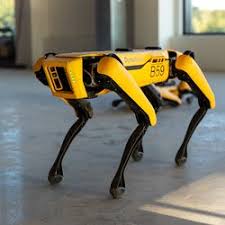
Since June, the company has been talking about a public release for its Spot robot (formerly SpotMini), and today, it finally gave some details about what's in store. The Spot isn't going on sale exactly, but if you're a company with a good idea (and some money), you'll be able to get one. That also means, for the average person on the street, that the odds of seeing a Spot in the wild just got a lot better.
The capabilities are more or less what the company showed off in June, but it's still impressive to see them in person. The Spot can go where you tell it, avoid obstacles, and keep its balance under extreme circumstances — which are all crucial skills if you're trying to navigate an unknown environment.
The Spot can also carry up to four hardware modules on its back, giving companies a way to swap in whatever skills the robot needs for this particular job. If it's checking for gas leaks, you can build in a methane detector. If you need connectivity over longer distances, you can attach a mesh radio module. Boston Dynamics is already outfitting units with LIDAR rigs from Velodyne (a favorite component for self-driving car projects) to create 3D maps of indoor spaces. Since the Spot is designed to work in the rain, outdoor spaces are on the table, too.