










Breaking News
 The Strait of Hormuz Could Become America's Suez Moment
 Former Green Beret on Doomsday Prepping, Potential Revolution, and What to Do When Chaos Erupts
 Martin Armstrong's Financial Endgame: Why Money Won't Disappear,...
 Socialism Is Pure Inefficiency
Top Tech News
 Tesla Model 3 killer charges from 10 to 97% in just 9 minutes
 World-first unpowered DNA computer sets speed record
 I Power 5 Buildings Off-Grid. Here's How
 The US government is pushing hard to get a working nuclear fission reactor into space by late 2028
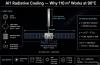 SpaceX Starmind AI in Space Radiator
 China Will Dominate Global Nuclear Energy Through 2035, Analyst Says
 These Absolutely Wild-Looking EVs Are Saudi Arabia's First Homegrown Cars
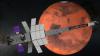 BEYOND THE MOON: NASA plans a nuclear-powered fleet to push DEEPER into space
 Big Oil Backs Mazama's $135 Million Bet On Superhot Geothermal
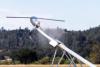 Quantum compass takes flight on Northrop's Lumberjack drone


Moving Superfast on Earth

Twelve to Eighteen-hour flights around the world are the current speed of global travel. If there are connections into smaller cities or rural areas then two or three-day travel times with connections may be required. It can also take one to three-hours for driving or public transit commutes inside large cities.
This should dramatically change by 2030 with more self-driving cars. Self-driving and networked vehicles should eliminate traffic jams. When nearly all rides are made with self-driving cars, self-driving buses, self-driving trucks and robo-taxis then the speed can be safely increased to 150 mph for major highways. The German Autobahn already has driving speeds of 90-110 mph.