Breaking News
 15 Years After Occupy, the Case Against the System Has Never Been Clearer
 8 Prepper Hacks for Cleaning Without Running Water
 The Economy Is Stagnating
 Britain To Appoint A Dedicated Tax Agent To Every Single Billionaire
Top Tech News
 BEYOND THE MOON: NASA plans a nuclear-powered fleet to push DEEPER into space
 Big Oil Backs Mazama's $135 Million Bet On Superhot Geothermal
 Quantum compass takes flight on Northrop's Lumberjack drone
 Terrifying AI Behavior Even Its Creators Couldn't Explain
 WW3 Near-Miss? AI Hallucinated Nuclear Weapons Components Aboard Chinese Vessel Bound For Iran
 Stripe Is Building the Toll Road for the Machine Economy
 Toyota Dakar hopeful swaps twin-turbo V6 for hydrogen fuel cells
 4-min turbo-inflatable cubic camp castle is now available in the USA
 Researchers Used Claude To Hack OpenAI Employee Accounts
 Chinese Scientists Develop New Oil Refining Method That Cuts Energy Use by 90%



Big Win in Syria: US Avoids Headache, Turkey Secures its Border, Russia Brokers Peace
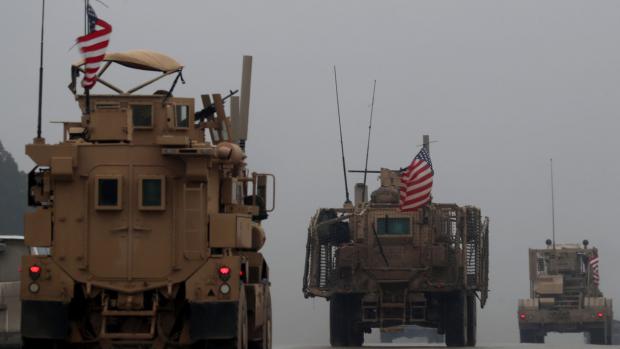
What is happening in Syria, following yet another Russia-brokered deal, is a massive geopolitical game-changer. I've tried to summarize it in a single paragraph this way:
"It's a quadruple win. The U.S. performs a face saving withdrawal, which Trump can sell as avoiding a conflict with NATO ally Turkey. Turkey has the guarantee – by the Russians – that the Syrian Army will be in control of the Turkish-Syrian border. Russia prevents a war escalation and keeps the Russia-Iran-Turkey peace process alive. And Syria will eventually regain control of the entire northeast."
Syria may be the biggest defeat for the CIA since Vietnam.
Yet that hardly begins to tell the whole story.
Allow me to briefly sketch in broad historical strokes how we got here.
It began with an intuition I felt last month at the tri-border point of Lebanon, Syria and Occupied Palestine; followed by a subsequent series of conversations in Beirut with first-class Lebanese, Syrian, Iranian, Russian, French and Italian analysts; all resting on my travels in Syria since the 1990s; with a mix of selected bibliography in French available at Antoine's in Beirut thrown in.
The Vilayets
Let's start in the 19thcentury when Syria consisted of six vilayets — Ottoman provinces — without counting Mount Lebanon, which had a special status since 1861 to the benefit of Maronite Christians and Jerusalem, which was a sanjak (administrative division) of Istanbul.
The vilayets did not define the extremely complex Syrian identity: for instance, Armenians were the majority in the vilayet of Maras, Kurds in Diyarbakir – both now part of Turkey in southern Anatolia – and the vilayets of Aleppo and Damascus were both Sunni Arab.
Nineteenth century Ottoman Syria was the epitome of cosmopolitanism. There were no interior borders or walls. Everything was inter-dependent.