










Breaking News
 The AI Bird-Flu Scenario They Just Published
 Japan's first robot ambulance works the 9-1-1 lines for humanoids
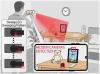 Cheap smartphone add-on pinpoints hidden cameras to shut down spies
 The $600 Tank That Beats a $10,000 Powerwall
Top Tech News
 Terrifying AI Behavior Even Its Creators Couldn't Explain
 WW3 Near-Miss? AI Hallucinated Nuclear Weapons Components Aboard Chinese Vessel Bound For Iran
 Stripe Is Building the Toll Road for the Machine Economy
 Toyota Dakar hopeful swaps twin-turbo V6 for hydrogen fuel cells
 4-min turbo-inflatable cubic camp castle is now available in the USA
 Researchers Used Claude To Hack OpenAI Employee Accounts
 Chinese Scientists Develop New Oil Refining Method That Cuts Energy Use by 90%
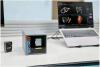 World's smallest CT scanner fits in the palm of your hand
 The Tesla Roadster will blow people's minds
 Peter Thiel-Funded Company Anduril to Triple the Number of Autonomous Surveillance Towers...



Entrepreneurial Space Revolution

This meant that the Bush moon program was deemed to be too costly and not practical. SpaceX created a heavy-lift vehicle in six years for less than a billion dollars and it is over 75% reusable.
Entrepreneurial space companies are now completing development in one-third the time for one-tenth the cost.
This seems to demonstrate that reusable rocket technology development previously failed not for technical reasons but for institutional reasons.
Rocket Labs was started by an engineer who raised $300 million. This has reached orbit in New Zealand. New Zealand does not have a space program.
For thousands of years, the oceans and rivers have generated huge wealth from low wealth transport. This has shaped where cities are built and provided a large portion of the world's economy and shapes global trade.
Now we can have zero-drag space access with point-to-point travel with reusable rockets.