










Breaking News
 'Weak' Donald Trump (Again) Fails To Assert His Powers Over Ukraine
 Double-barrel smart telescope lets you swap optics like camera lenses
 Wearable drone detection identifies threats over 3 miles away
 Want The Flying Version Of The Tesla Roadster? You'll Need An Invite
Top Tech News
 I Built a Website to Expose Solar and Battery Scams
 Whistleblower Issues Dire Warning: Rogue AI, Hacking Nuclear Programs...
 Multi-material insulation delivers up to 10,000 x the stiffness
 Anduril's plan to save US sub edge from China's undersea surge
 Researchers Develop AI 'Mind-Reading' Tool That Reconstructs What Your Eyes See
 Video: Dexterous robot hand learns the delicate art of silk embroidery
 The computer that can read your mind:
 Seven apps. One craft
 SHOCK CASE REPORT: Advanced Alzheimer's Patient Regains Speech, Memory, Mobility...
 Most artificial limbs rely on silicone or plastic to mimic human hands.



Bone Broth Strengthens Immunity, Body, and Joints, And You Don't Need To Spend A Bunch To Make I
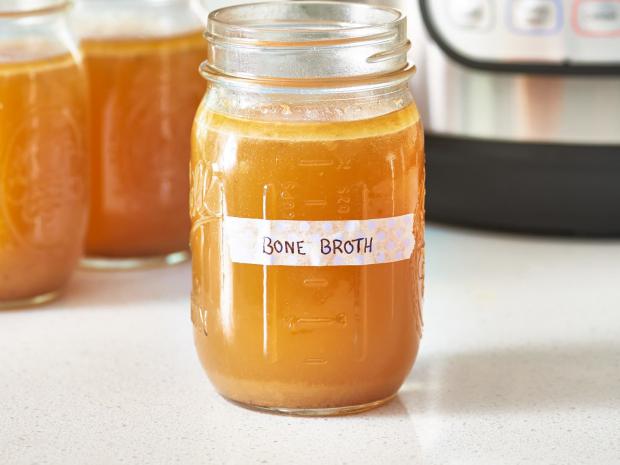
The simple dish confers a set of valuable nutrients, like glutamine and collagen, that are uncommon in other foods.
According to Healthline, animal bones are also rich in calcium, magnesium, potassium, phosphorus, and other trace minerals that help build and strengthen our own human bones.
Bone broth also promotes gut and digestive health, supports joint mobility, skin, hair, teeth, and nails, and even better sleep. Other health benefits include an improved immune system and faster muscle recovery.
But while the soup, made simply by boiling the bones of animals, is always referred to as "bone broth," is there any meaningful difference between it and the cooking stock our mothers used as the base for chicken noodle soup when we were sick?
The answer is very important, because there are likely many people who could benefit tremendously from bone broth's health benefits, but can't afford to buy health food store prices.
Stock vs bone broth
On a surface level, the answer is no, but it depends on the ingredients list, as a product can call itself anything—bone broth, cooking stock, chicken stock, or just "broth," but unless it has the ingredients of something like Kettle & Fire or another commercial kind of bone broth, it's just flavored water.