










Breaking News
 They Found Something Beneath the Pyramids That Shouldn't Be There!
 Nobody Believes it was a Suicide! (Epstein Whistleblower is Dead) – Awaken with JP
 Mike Benz: It's the first election in 6 years where Lula doesn't have tens of millions of US
 Lies Serving Israel Have Sent Us to War with Iran
Top Tech News
 Seven apps. One craft
 SHOCK CASE REPORT: Advanced Alzheimer's Patient Regains Speech, Memory, Mobility...
 Most artificial limbs rely on silicone or plastic to mimic human hands.
 Flying cell tower beams phone signal to Japan from 10 miles up
 Chinese Commercial Reactor Achieves Nuclear Fusion with Clean Hydrogen-Boron Fuel
 Med Beds Just Took a MASSIVE Step Forward, Healing People in Days!
 Palmer Luckey: Autonomous Weapons Are Ancient and Why Anduril Won't Build Humanoids | EP #295
 A laser just photographed objects through six feet of concrete
 Elon Musk's Next-Gen Motor Destroy Entire EV Industry
 China's disputed satellite refueling heralds new space war era



SPACE FLOATERS Humans could move to 'floating asteroid belt colony' --
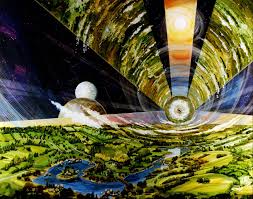
HUMANS could live on giant orbs floating in the asteroid belt between Mars and Jupiter within the next 15 years.
That's the bonkers claim made by top scientist Pekka Janhunen, who says millions of people could inhabit a megacity in space by 2026.
Dr Janhunen, an astrophysicist at the Finnish Meteorological Institute in Helsinki, described his vision in a research paper published this month.
He laid out the blueprint for floating "mega-satellites" around the dwarf planet Ceres, which lies roughly 325million miles (520million km) from Earth.
"The motivation is to have a settlement with artificial gravity that allows growth beyond Earth's living area," Dr Janhunen wrote.
The vast majority of plots to settle distant worlds revolve around the Moon or Mars. This is largely due to their close proximity to Earth.