










Breaking News
 #689: The Empire of Lies | Charles Goyette
 One Arizona storm; 15 rain totes
 Teach AI Good Morality
 Guilfoyle Resigns at Trump's Request Following Credit Card Scandal
Top Tech News
 I Built a Website to Expose Solar and Battery Scams
 Whistleblower Issues Dire Warning: Rogue AI, Hacking Nuclear Programs...
 Multi-material insulation delivers up to 10,000 x the stiffness
 Anduril's plan to save US sub edge from China's undersea surge
 Researchers Develop AI 'Mind-Reading' Tool That Reconstructs What Your Eyes See
 Video: Dexterous robot hand learns the delicate art of silk embroidery
 The computer that can read your mind:
 Seven apps. One craft
 SHOCK CASE REPORT: Advanced Alzheimer's Patient Regains Speech, Memory, Mobility...
 Most artificial limbs rely on silicone or plastic to mimic human hands.



Rocket Lab just unveiled plans for a big new rocket called Neutron that could fly astronauts
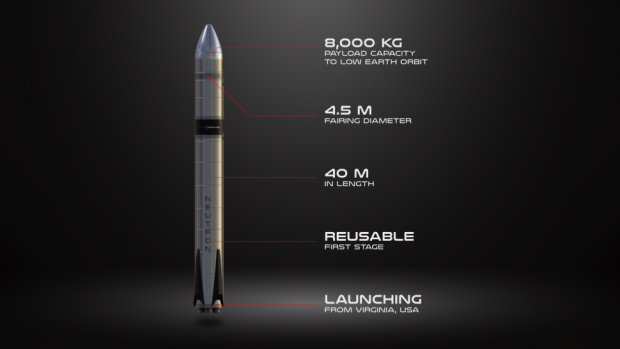
The private launch company Rocket Lab unveiled its plans to launch a big, new rocket called Neutron by 2024 on Monday (March 1), turning away from its longstanding commitment to launch tiny satellites exclusively on small boosters.
The pivot comes as the company prepares to go public following a planned merger with Vector Acquisition Corporation. Scaling up from the company's standby Electron rocket marks the second recent change of plans toward long-scorned opportunities and is meant to take advantage of burgeoning interest in establishing megaconstellation networks of satellites, like SpaceX's Starlink. The Neutron rocket will also be capable of launching astronauts, Rocket Lab said.