










Breaking News
 The TERRIFYING Reason Peter Thiel Escaped the US
 Professor Jiang Breaks Down the Greater Israel Project
 Edward Snowden on Palestine and Sam Altman
 Palantir. IT'S WORSE Than You Think
Top Tech News
 Solar Panels Are Doing Something Nobody Expected
 DeLorean climbs skyward to race electric flying cars
 Atari's 800XL returns with a keyboard, cartridges and BASIC
 Bioinspired robot airdrops into remote waters via morphing wing-sail
 Anduril interceptor adapts to emerging threats via swappable stages
 I Built a Website to Expose Solar and Battery Scams
 Whistleblower Issues Dire Warning: Rogue AI, Hacking Nuclear Programs...
 Multi-material insulation delivers up to 10,000 x the stiffness
 Anduril's plan to save US sub edge from China's undersea surge
 Researchers Develop AI 'Mind-Reading' Tool That Reconstructs What Your Eyes See



How to Design a Natural Disaster-Resistant Home
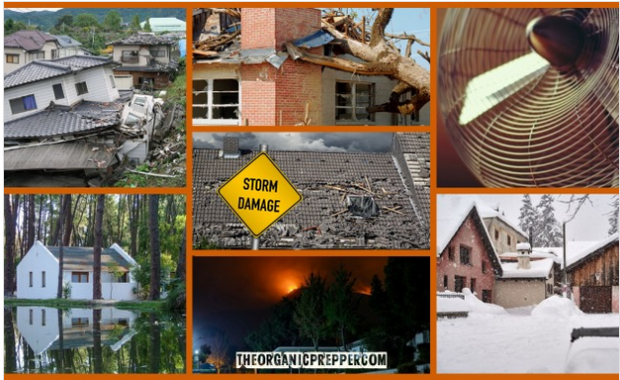
Every geographical region is associated with some type of natural disaster. Some areas are vulnerable to several. Therefore, there are many benefits to planning and building a natural disaster-resistant home.
According to the Insurance Information Institute: "there was an average of 520 natural catastrophes per year between 1989 and 2018. In 2019 alone, there were 820 — a nearly 58% increase from the average over the past three decades. Insured losses for damage caused by these natural disasters exceeded $82 billion. This statistic doesn't reflect the uninsured losses or incalculable losses of personal items like family photographs and other cherished objects.
The costs of NOT building a natural disaster-resistant home
Nature has no concern for roofs, walls, and foundations. Unfortunately, many construction firms have little concern about building housing to provide a robust defense against the natural disasters associated with their setting. Although builders must construct houses according to local code, that may not be enough for homebuyers looking for properties designed with Mother Nature's fury in mind.
While $82 billion reflects the cost to insurance providers, the cost to individuals is more challenging to reflect. How does one measure the disruption to property owners' lives after they've lost everything and must live out of a hotel for months or longer?