










Breaking News
 The TERRIFYING Reason Peter Thiel Escaped the US
 Professor Jiang Breaks Down the Greater Israel Project
 Edward Snowden on Palestine and Sam Altman
 Palantir. IT'S WORSE Than You Think
Top Tech News
 Solar Panels Are Doing Something Nobody Expected
 DeLorean climbs skyward to race electric flying cars
 Atari's 800XL returns with a keyboard, cartridges and BASIC
 Bioinspired robot airdrops into remote waters via morphing wing-sail
 Anduril interceptor adapts to emerging threats via swappable stages
 I Built a Website to Expose Solar and Battery Scams
 Whistleblower Issues Dire Warning: Rogue AI, Hacking Nuclear Programs...
 Multi-material insulation delivers up to 10,000 x the stiffness
 Anduril's plan to save US sub edge from China's undersea surge
 Researchers Develop AI 'Mind-Reading' Tool That Reconstructs What Your Eyes See



Phantom Space wants to be the Henry Ford of rockets
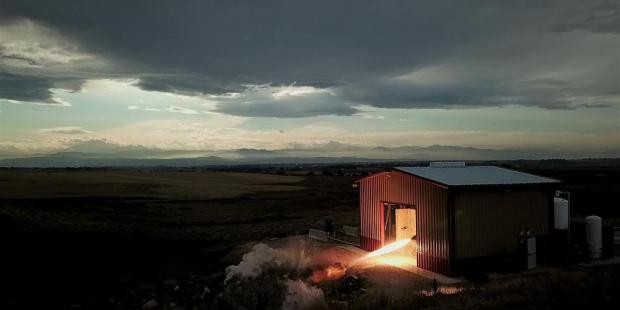
Jim Cantrell calls himself "one of the intellectual fathers of the small-launch business." It's hard to disagree. When Elon Musk founded SpaceX in 2002, Cantrell became its first vice president of business development. His expertise was critical to the development of the company's first rocket, the Falcon 1.
Cantrell later founded Strategic Space Development (StratSpace), which has worked on projects like NASA's OSIRIS-REx mission to asteroid Bennu and the Planetary Society's demo of solar-sail technology in space. He was a cofounder and CTO of Moon Express, a company that wants to one day mine the moon for resources.
He's also well versed in the hazards of an industry where failures can be literally explosive. Moon Express, a finalist for the Google Lunar X Prize (a $30 million competition to land a rover on the moon that was later canceled), has yet to actually make it to space, let alone the moon.