










Breaking News
 The TERRIFYING Reason Peter Thiel Escaped the US
 Professor Jiang Breaks Down the Greater Israel Project
 Edward Snowden on Palestine and Sam Altman
 Palantir. IT'S WORSE Than You Think
Top Tech News
 Solar Panels Are Doing Something Nobody Expected
 DeLorean climbs skyward to race electric flying cars
 Atari's 800XL returns with a keyboard, cartridges and BASIC
 Bioinspired robot airdrops into remote waters via morphing wing-sail
 Anduril interceptor adapts to emerging threats via swappable stages
 I Built a Website to Expose Solar and Battery Scams
 Whistleblower Issues Dire Warning: Rogue AI, Hacking Nuclear Programs...
 Multi-material insulation delivers up to 10,000 x the stiffness
 Anduril's plan to save US sub edge from China's undersea surge
 Researchers Develop AI 'Mind-Reading' Tool That Reconstructs What Your Eyes See



Breakthrough: This fermented Japanese superfood can inhibit SARS-CoV-2 infections, researchers find
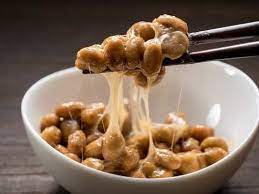
Published Tuesday, July 13, in the journal Biochemical and Biophysical Research Communications, the study showed that unheated natto extract degraded the receptor-binding domain (RBD), a key region of the spike protein that studs the outer surface of SARS-CoV-2.
The RBD is especially important because the virus uses it to anchor to a receptor on the surface of certain cells before infecting them.
Moreover, the researchers confirmed that the unheated natto extract had the same effects on the RBD of some of the mutated strains of SARS-CoV-2, particularly the alpha variant. This variant was first detected in the United Kingdom in September 2020. It was then detected in the U.S. three months later.
Natto extract degrades key region of SARS-CoV-2 spike protein
Natto is a traditional Japanese dish made by fermenting soybeans with Bacillus subtilis, a bacterium typically found in soil and vegetation.