










Breaking News
 Still Discriminating
 Nike CEO may have just admitted the company went too woke as stock hits 12-year low
 Will Europe Be Annihilated Over Kaliningrad?
 The Last Asset--You Will Own Nothing
Top Tech News
 Most artificial limbs rely on silicone or plastic to mimic human hands.
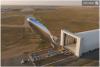 Flying cell tower beams phone signal to Japan from 10 miles up
 Chinese Commercial Reactor Achieves Nuclear Fusion with Clean Hydrogen-Boron Fuel
 Med Beds Just Took a MASSIVE Step Forward, Healing People in Days!
 Palmer Luckey: Autonomous Weapons Are Ancient and Why Anduril Won't Build Humanoids | EP #295
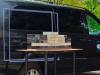 A laser just photographed objects through six feet of concrete
 Elon Musk's Next-Gen Motor Destroy Entire EV Industry
 China's disputed satellite refueling heralds new space war era
 BYD Will Put Solid-State Batteries In An EV Next Year: Executive
 FDA-cleared exoskeleton puts spinal-cord patients back on their feet



This wildly reinvented wind turbine generates five times more energy than its competitors
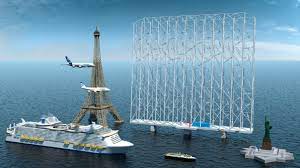
Except 80% of the world's offshore wind blows in deep waters, where it's difficult to build wind farms. A new design for a radically different kind of wind turbine could begin to change that.
Norwegian company Wind Catching Systems is developing a floating, multi-turbine technology for wind farms that could generate five times the annual energy of the world's largest, single wind turbine. This increased efficiency is due to an innovative design that reinvents the way wind farms look and perform.
Unlike traditional wind turbines, which consist of one pole and three gargantuan blades, the so-called Wind Catcher is articulated in a square grid with over 100 small blades. At 1,000 feet high, the system is over three times as tall as an average wind turbine, and it stands on a floating platform that's anchored to the ocean floor.