










Breaking News
 Facilitating Wholesale Digital Asset Settlement
 October 7th special with PROJECTPENS.org on Ben Swann's "America Now"
 Paris is on fire as rioters take over across France
 Trump Refuses Iran's Offer To Bail Out His Presidency
Top Tech News
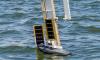 Bioinspired robot airdrops into remote waters via morphing wing-sail
 Anduril interceptor adapts to emerging threats via swappable stages
 I Built a Website to Expose Solar and Battery Scams
 Whistleblower Issues Dire Warning: Rogue AI, Hacking Nuclear Programs...
 Multi-material insulation delivers up to 10,000 x the stiffness
 Anduril's plan to save US sub edge from China's undersea surge
 Researchers Develop AI 'Mind-Reading' Tool That Reconstructs What Your Eyes See
 Video: Dexterous robot hand learns the delicate art of silk embroidery
 The computer that can read your mind:
  Seven apps. One craft


Natural immunity, still strong and durable 20 months later (no boosters needed)
Natural immunity doesn't always work this well. There are plenty of diseases where protection wanes after six months, like RSV, or Norovirus, and many common cold coronaviruses.
Natural Immunity to COVID-19 Detected at 20 Months After Infection: Study
Zachary Stieber, Epoch Times
Protection against the virus that causes COVID-19 among the recovered was detected by researchers at 20 months post-infection, adding to the body of evidence that such protection, known as natural immunity, is long-lasting.
Researchers found antibodies against the SARS-CoV-2 spike protein receptor-binding domain (RBD) in 99 percent of study participants who tested positive for COVID-19, with some having had the illness as long as 20 months prior.
"The major takeaway is that natural immunity … is strong and durable," [Dr Dorry] Segev told The Epoch Times in an email.
Dr. Dorry Segev, the director of the Epidemiology Research Group in Organ Transplantation at Johns Hopkins University.
There were three groups involved in the study. Of the 295 people who "thought they had had Covid" about half of them actually had. And of 246 who thought they "had never had Covid" 10% appear to have had an asymptomatic infection.