










Breaking News
 BANK OF AMERICA SURRENDERS: BofA Just Issued a $309 Silver Alert (Physical Premiums Exploding)
 Steve Witkoff says they are close to finishing "a prosperity agreement" for Ukraine,...
 NOW - Starmer says a declaration of intent has been signed...
 Remarks at the New Jersey Bankers Association, Jersey City, New Jersey
Top Tech News
 The First Production All-Solid-State Battery Is Here, And It Promises 5-Minute Charging
 See inside the tech-topia cities billionaires are betting big on developing...
 Storage doesn't get much cheaper than this
 Laser weapons go mobile on US Army small vehicles
 EngineAI T800: Born to Disrupt! #EngineAI #robotics #newtechnology #newproduct
 This Silicon Anode Breakthrough Could Mark A Turning Point For EV Batteries [Update]
 Travel gadget promises to dry and iron your clothes – totally hands-free
 Perfect Aircrete, Kitchen Ingredients.
 Futuristic pixel-raising display lets you feel what's onscreen
 Cutting-Edge Facility Generates Pure Water and Hydrogen Fuel from Seawater for Mere Pennies



'Origami' helmets, robots and Mars bases deploy with the pull of a string
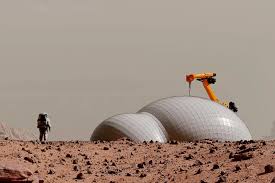
Should they simply give up? Curse the earthquake or typhoon, or the space agency that sent them to Mars? Or should they take inspiration from an ancient Japanese art of paper-folding to 3D-print all their solutions on-site?
If you ask Akib Zaman, an MIT electrical engineering and computer science (EECS) graduate student and lead author of "One String to Pull Them All: Fast Assembly of Curved Structures from Flat Auxetic Linkages," he's going to tell you to go with origami.
Well, correction: he'll explain that the method he as his co-authors developed doesn't work like origami (which involves nothing but paper), but like kirigami, which can include cutting and gluing (or in this case, attached string), to produce auxetic devices – that is, structures that thicken when stretched and thin when compressed.