










Breaking News
 Tulsi's Assessment That Putin Doesn't Want To Conquer All of Ukraine Is Absolutely Correct
 Google AI Lead Shane Legg Defines Levels of AGI and Superintelligence and How to Test for...
 EngineAI T800: Born to Disrupt! #EngineAI #robotics #newtechnology #newproduct
 Tuesday War Room LIVE: Trump Mentioned in ANOTHER Big Batch of Epstein Files...
Top Tech News
 Travel gadget promises to dry and iron your clothes – totally hands-free
 Perfect Aircrete, Kitchen Ingredients.
 Futuristic pixel-raising display lets you feel what's onscreen
 Cutting-Edge Facility Generates Pure Water and Hydrogen Fuel from Seawater for Mere Pennies
 This tiny dev board is packed with features for ambitious makers
 Scientists Discover Gel to Regrow Tooth Enamel
 Vitamin C and Dandelion Root Killing Cancer Cells -- as Former CDC Director Calls for COVID-19...
 Galactic Brain: US firm plans space-based data centers, power grid to challenge China
 A microbial cleanup for glyphosate just earned a patent. Here's why that matters
 Japan Breaks Internet Speed Record with 5 Million Times Faster Data Transfer



This Silicon Anode Breakthrough Could Mark A Turning Point For EV Batteries [Update]
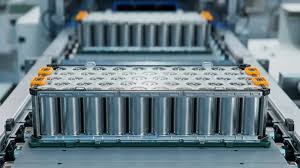
Just like cars and gadgets, battery technology evolves in phases. Sometimes you get breakthroughs, other times things get incrementally better with small year-over-year improvements.
But there's a big breakthrough on the horizon: In the quest to squeeze more range and faster charging times out of lithium-ion cells, the battery industry has long been looking to replace graphite anodes—the part of the battery which stores electrons—with a better, more energy-dense material. Some battery companies like Group14 believe that the ideal graphite replacement will come in the form of silicon. And now, they have a pretty good proof-of-concept.
Porsche-backed Group14 Technologies has teamed with New York-based battery materials firm Sionic Energy to develop silicon anodes. The companies announced joint results on Monday, concluding that their 100% silicon-carbon anodes had achieved stable performance at high temperatures during charge-discharge cycles and storage. The anodes were tested in 4-amp hour, 10-Ah and 20-Ah pouch cells, where the companies claim the cells delivered stable performance at 45 degrees Celsius (113 degrees Fahrenheit) and 60C (140F).
If you're new to the battery world, don't worry, I'll explain that in plain language. The anode is the part of a battery where lithium ions are stored during charging, and what they leave during discharging, when the battery is in use. The anode is essentially responsible for how much energy a cell can hold and how quickly it can charge.
Graphite has long been the staple anode material thanks to its stability and high energy density. However, mining graphite is dirty, expensive and poses geopolitical risks, with China continuing to be the world's top graphite producer and exporter—processing over 90% of the world's graphite as of 2023. To move away from this expensive China-centric graphite supply chain and make Western companies more independent, battery makers have been experimenting with alternatives such as silicon and synthetic, lab-produced graphite.
The anode is also the single largest component in a battery by volume, becoming the primary contributor to pack weight, according to the European Carbon and Graphite Association. A battery contains more graphite than lithium or cathode active materials (such as nickel, cobalt and manganese). Replacing it with a lighter silicon anode would not only allow battery makers to reduce pack weight, but also shrink the overall battery size without compromising energy density and range.