










Breaking News
 Charlie's Killer Was MKUltra'd?
 Doctors are finally admitting that biopsies Spread Cancer…
 We MUST keep talking about this, demand Voter ID. Joe Rogan and Elon Musk on Fraud
 Nick Shirley exposes there are 1,200 medical transport companies in Minnesota.
Top Tech News
 The First Production All-Solid-State Battery Is Here, And It Promises 5-Minute Charging
 See inside the tech-topia cities billionaires are betting big on developing...
 Storage doesn't get much cheaper than this
 Laser weapons go mobile on US Army small vehicles
 EngineAI T800: Born to Disrupt! #EngineAI #robotics #newtechnology #newproduct
 This Silicon Anode Breakthrough Could Mark A Turning Point For EV Batteries [Update]
 Travel gadget promises to dry and iron your clothes – totally hands-free
 Perfect Aircrete, Kitchen Ingredients.
 Futuristic pixel-raising display lets you feel what's onscreen
 Cutting-Edge Facility Generates Pure Water and Hydrogen Fuel from Seawater for Mere Pennies



Not Worth a Continental
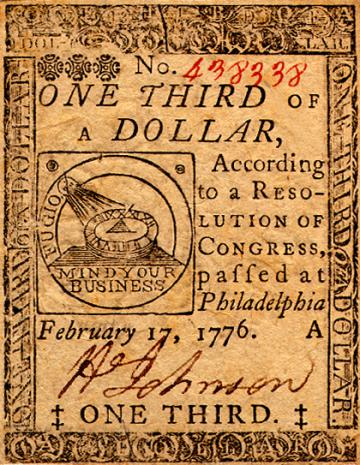
In late-18th-century America, something of minimal value was often described as being "not worth a continental," which referred to the continental dollar, the American currency at the time of the revolution.
The continental was paper money. It had occurred to the colonists that, as their revolution was costing quite a bit to maintain, they could go into "temporary" debt to finance the war. Soon it became clear that the debt could not be repaid. Also, the printing of paper banknotes resulted in inflation. The solution? Print more of them. Further devaluation of the continental motivated the colonists to print more… then more… then still more. The continental became worthless, either for local trade or for repayment of debt.
The new country, the United States, then did something quite unusual. In its new Constitution, it created a clause to assure that this would never happen again. Under Article I, Section 10, the states were not permitted to "coin Money; emit Bills of Credit; [or] make any Thing but gold and silver Coin a Tender in Payment of Debts."