










Breaking News
 Interview 1996 - The Fraud 1000x BIGGER Than Somali Day Care (NWNW #614)
 1 Min Ago: MORGAN STANLEY MEMO LEAKED Exit All Silver Positions Before Month End
 Silver Price Collapse Begins Friday? - $14 Billion In Gold & Silver Sales Incoming
 Freshman Rep goes full BEAST MODE during questioning over Somali scam…
Top Tech News
 Kawasaki's four-legged robot-horse vehicle is going into production
 The First Production All-Solid-State Battery Is Here, And It Promises 5-Minute Charging
 See inside the tech-topia cities billionaires are betting big on developing...
 Storage doesn't get much cheaper than this
 Laser weapons go mobile on US Army small vehicles
 EngineAI T800: Born to Disrupt! #EngineAI #robotics #newtechnology #newproduct
 This Silicon Anode Breakthrough Could Mark A Turning Point For EV Batteries [Update]
 Travel gadget promises to dry and iron your clothes – totally hands-free
 Perfect Aircrete, Kitchen Ingredients.
 Futuristic pixel-raising display lets you feel what's onscreen



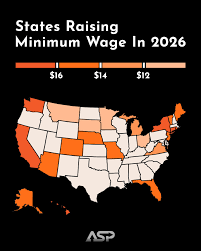
19 US States Raise Minimum Wage
When the cost of labor exceeds the value the labor actually produces, companies begin to reduce labor costs. This has led to a massive shift to automation and outsourcing. Employers are often forced to reduce their workforce, and those who remain face reduced hours or increased responsibilities without commensurate pay increases.
Wages rise with productivity in a healthy economy. Currently, employers' costs are growing faster than the value added by workers in numerous instances. Yes, the federal minimum wage has been stuck at $7.25 per hour for nearly a decade, and nowhere in the US is that salary sustainable. Washington state now mandates roughly $17.13 per hour; California's state minimum is nearly $17; New York's major cities approach $17; and other states set their minimums above $15. The market or demand does not determine these set wages.
California routinely selects groups of minimum-wage workers and determines that their skill set is now worth 10 times as much. The state in general increased the minimum wage to $16.50 per hour on January 1, 2026, while certain cities have raised the minimum to $19 per hour. Yet, hotel and airline workers in Los Angeles are to receive a minimum wage of $38 per hour within the next two years. Hotels are already struggling, with only 79% of the traffic they once experienced prior to the pandemic. The city shed 11,000 hotel jobs last year, and this proposal nearly ensures more jobs will be cut. The state saw the same phenomenon when minimum wage was raised for fast food workers—employers reduced staff and raised prices for consumers.
Should a hotel maid earn more than a teacher in Los Angeles? Do the people constructing the hotel deserve less than those paid to book rooms? Does replacing towels and bed sheets, or checking a boarding pass, warrant an $80K salary? Pay grades are no longer based on skill and experience but on industry pandering. Yet another reason for companies to relocate when possible, as we saw throughout 2025 and will continue to see in 2026.
Rest assured that the government will continue to raise taxes on the lowest-paid workers. Wages rise naturally in a real economic expansion when businesses compete for workers. That is how a free market functions. But when governments artificially raise wages, businesses respond logically—by cutting jobs, reducing hours, or passing the costs onto consumers through inflation. The very people politicians claim to be helping end up worse off, as their cost of living rises and entry-level jobs disappear.