










Breaking News
 Interview 1996 - The Fraud 1000x BIGGER Than Somali Day Care (NWNW #614)
 1 Min Ago: MORGAN STANLEY MEMO LEAKED Exit All Silver Positions Before Month End
 Silver Price Collapse Begins Friday? - $14 Billion In Gold & Silver Sales Incoming
 Freshman Rep goes full BEAST MODE during questioning over Somali scam…
Top Tech News
 Kawasaki's four-legged robot-horse vehicle is going into production
 The First Production All-Solid-State Battery Is Here, And It Promises 5-Minute Charging
 See inside the tech-topia cities billionaires are betting big on developing...
 Storage doesn't get much cheaper than this
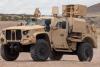 Laser weapons go mobile on US Army small vehicles
 EngineAI T800: Born to Disrupt! #EngineAI #robotics #newtechnology #newproduct
 This Silicon Anode Breakthrough Could Mark A Turning Point For EV Batteries [Update]
 Travel gadget promises to dry and iron your clothes – totally hands-free
 Perfect Aircrete, Kitchen Ingredients.
 Futuristic pixel-raising display lets you feel what's onscreen



How Europe Became a Battlefield for Someone Else's War
Decision-making remains insulated, prosperity remains intact, and political life continues uninterrupted—while destruction, instability, and escalation are exported to allied territory. The war in Ukraine follows this pattern with brutal clarity.
Europe is not watching this war from a safe distance. It is hosting it. Economically, politically, strategically, Europe is the space where risk accumulates and consequences materialize. Critical energy infrastructure "rupture" here. Industries relocate from here. Social cohesion strains here. Meanwhile, the strategic center of gravity that frames the conflict remains geographically and materially protected. This is a deliberate feature of American alliance design.
For decades, Europeans were encouraged to believe that integration into NATO meant security, and that strategic dependency was the price of stability. Ukraine exposes the inversion of that bargain. Europe's role is not primarily to be defended, but to serve as the terrain on which confrontations unfold—close enough to matter, distant enough to be expendable. The war does not shield Europe from danger; it situates Europe inside it.
This is a realist diagnosis. Power operates through geography, leverage, and asymmetry. The Ukraine war demonstrates that Europe remains structurally positioned as a buffer between competing great powers—absorbing shocks, financing escalation, and internalizing costs while strategic insulation is maintained elsewhere. What is presented as collective defense increasingly resembles collective exposure.
The question this war forces upon Europe is therefore not whether Ukraine can be defended indefinitely, but whether Europe can continue to exist as a strategic actor at all. The conflict marks a threshold: the moment when Europe's long-standing belief in delegated security collides with the material reality of delegated risk. And that collision suggests an uncomfortable conclusion—the war in Ukraine may be the closing chapter of its strategic autonomy.
Every major war has a visible trigger and an invisible logic. The invasion of Ukraine is routinely framed through the first, borders crossed, norms violated, red lines breached. But those explanations describe events, not structure. To understand why this war unfolded where it did, why it escalated when it did, and why Europe now bears costs that far exceed its strategic agency, one must return to an older, colder framework: geography as power.
At the beginning of the twentieth century, British geographer Halford Mackinder articulated what remains one of the most durable insights in strategic thought: global power does not primarily flow from ideology or morality, but from control over space, resources, and connectivity. His "Heartland" theory argued that the vast Eurasian landmass—the "World-Island"—was the decisive prize of global politics. Whoever dominated its core would possess unmatched strategic depth, industrial capacity, and resilience against maritime blockade.