










Breaking News
 EXCERPTS: Citigroup Inc. received approval to launch a wholly-owned securities business...
 The Crown Wants It Kept Secret: AG Asks the Federal Court to Seal Information...
 The Supreme Court Just Denied Your Constitutional Rights
 The state is trying to crush the Amish with ruinous penalties.
Top Tech News
 Modular phone promises total privacy at the flick of a switch
 Genetically Engineered War Dogs for 134 Pound Cyborg Dire Wolves Now – Later 600 Pound Wolves
 They're Quietly REPLACING Our Food With THIS… And Nobody Is Talking About It!
 Chicago Opens First "Teacher-Free" AI School as Global Push Accelerates
 Solar Panels Are Doing Something Nobody Expected
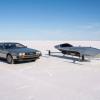 DeLorean climbs skyward to race electric flying cars
 Atari's 800XL returns with a keyboard, cartridges and BASIC
 Bioinspired robot airdrops into remote waters via morphing wing-sail
 Anduril interceptor adapts to emerging threats via swappable stages
 I Built a Website to Expose Solar and Battery Scams


World's most powerful hypergravity machine is 1,900X stronger than Earth
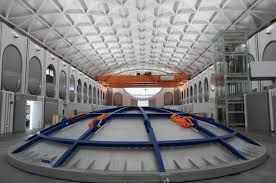
Built by Shanghai Electric Nuclear Power Group as part of China's Centrifugal Hypergravity and Interdisciplinary Experiment Facility (CHIEF), CHIEF1900 will soon function at 1,900 g-tonnes, surpassing the previously most powerful centrifuge the CHIEF1300.
"We aim to create experimental environments that span milliseconds to tens of thousands of years, and atomic to [kilometer] scales – under normal or extreme conditions of temperature and pressure," Chen Yunmin, CHIEF's chief scientist and a professor at Zhejiang University, told South China Morning Post. "It gives us the chance to discover entirely new phenomena or theories."
We first reported on the facility in 2024, when the scale of the project was unveiled, but with only the preliminary machinery in place. The impressive CHIEF1300 came online in September 2025, with the ability to generate up to 1,300 g-tonnes of hypergravity. The new centrifuge is about 46% more extreme in its capacity.