










Breaking News
 Ukraine Becomes World's AI Weapons Laboratory
 Iraq Revives Syria Land Route, Post-Assad, To Export Oil To Europe
 Germany's Economy Minister Urges Nuclear Rethink As Energy Prices Surge, Growth Forecasts Slide
 Iran Attacks Kuwaiti Desalination Plant, Bringing Gulf Water Supplies Into Focus
Top Tech News
 DARPA O-Circuit program wants drones that can smell danger...
 Practical Smell-O-Vision could soon be coming to a VR headset near you
 ICYMI - RAI introduces its new prototype "Roadrunner," a 33 lb bipedal wheeled robot.
 Pulsar Fusion Ignites Plasma in Nuclear Rocket Test
 Details of the NASA Moonbase Plans Include a Fifteen Ton Lunar Rover
 THIS is the Biggest Thing Since CGI
 BACK TO THE MOON: Crewed Lunar Mission Artemis II Confirmed for Wednesday...
 The Secret Spy Tech Inside Every Credit Card
 Red light therapy boosts retinal health in early macular degeneration
 Hydrogen-powered business jet edges closer to certification


Starlink smasher? China claims world's best high-powered microwave weapon
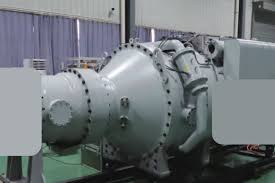
One aspect that media outlets have so far focused on is its capability for low-orbit interference. With recent news that Starlink satellites are set to orbit closer to the Earth to avoid collisions with space debris, this HPM device could theoretically target Elon Musk's space communications network.
The weapon, engineered by a team led by Wang Gang at the High-Power Microwave Science and Technology Key Laboratory of the Northwest Institute of Nuclear Technology (NINT) in Xi'an, Shaanxi Province, is said to be compact – about the size of a small truck – and represents a huge leap forward in directed-energy weaponry that could disrupt or destroy satellites and other electronics in low Earth orbit.