










Breaking News
 Trump's Morgenthau Plan for Iran
 Virginia Conservatives Win Appeal, Nullifying Fraudulent Election of GOP Chairman...
 MAGA congressman says Americans would become 'unglued' over alien briefings:
 Embattled Tulsi Gabbard in fight for survival as rivals push smear campaign to force Trump's han
Top Tech News
 DARPA O-Circuit program wants drones that can smell danger...
 Practical Smell-O-Vision could soon be coming to a VR headset near you
 ICYMI - RAI introduces its new prototype "Roadrunner," a 33 lb bipedal wheeled robot.
 Pulsar Fusion Ignites Plasma in Nuclear Rocket Test
 Details of the NASA Moonbase Plans Include a Fifteen Ton Lunar Rover
 THIS is the Biggest Thing Since CGI
 BACK TO THE MOON: Crewed Lunar Mission Artemis II Confirmed for Wednesday...
 The Secret Spy Tech Inside Every Credit Card
 Red light therapy boosts retinal health in early macular degeneration
 Hydrogen-powered business jet edges closer to certification


Iran Attacks Kuwaiti Desalination Plant, Bringing Gulf Water Supplies Into Focus
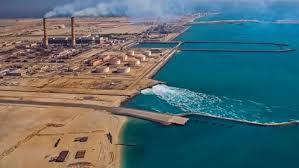
Not even a week after we raised that question, the first worst-case scenario emerged. On March 8, one week into the conflict, an Iranian attack drone struck a water desalination plant in Bahrain.
Fast forward to Friday morning, on the conflict's 35th day: Kuwaiti authorities claimed Iranian forces targeted a power and desalination plant, sounding even more alarm bells that civilian infrastructure is increasingly moving into the crosshairs.
Bloomberg quoted Kuwait's Ministry of Electricity, Water and Renewable Energy as saying an Iranian strike damaged components of the water desalination plant.
This suggests Tehran has exposed the vulnerability of critical water infrastructure across a region that relies heavily on these facilities, which remove salt and impurities from seawater or brackish water for drinking water and other agricultural or industrial uses.
Al Jazeera's Mohamed A. Hussein recently explained why Gulf states heavily rely on water desalination plants:
The Gulf states are deserts with no permanent rivers. While they lack rivers, they do have seasonal waterways called wadis, which carry water during rare rainfall. These nations rely primarily on groundwater and desalination to supply water to their rapidly growing cities, industrial zones and agricultural areas.
The map below shows just that:

Hussein noted:
The Gulf countries produce roughly 40 percent of the world's desalinated water, operating more than 400 desalination plants along their coasts.