










Breaking News
 Investors are hedging against corporate defaults at a record pace:
 Physicists captured a crystal made only of electrons, forming a honeycomb pattern without atoms...
 US Treasury Largest Debt Buyback
 BlackRock TCP Capital's Loan Write-Downs Masked by Restructurings
Top Tech News
 DARPA O-Circuit program wants drones that can smell danger...
 Practical Smell-O-Vision could soon be coming to a VR headset near you
 ICYMI - RAI introduces its new prototype "Roadrunner," a 33 lb bipedal wheeled robot.
 Pulsar Fusion Ignites Plasma in Nuclear Rocket Test
 Details of the NASA Moonbase Plans Include a Fifteen Ton Lunar Rover
 THIS is the Biggest Thing Since CGI
 BACK TO THE MOON: Crewed Lunar Mission Artemis II Confirmed for Wednesday...
 The Secret Spy Tech Inside Every Credit Card
 Red light therapy boosts retinal health in early macular degeneration
 Hydrogen-powered business jet edges closer to certification


The Scary Truth About Living in Big Cities During the Turbulent Times Ahead
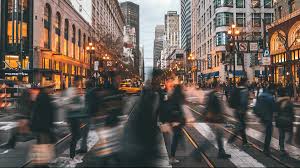
How do you view the value proposition of living in a big city today, given what is transpiring?
Jeff Thomas: Well, in my college years, I found cities to be very attractive. Lots of social opportunities, lots of shops, a greater variety of goods, etc. But, during that time, I was very fortunate to have experienced two city crises from which I learned valuable lessons.
The first was an oil crisis in the winter of 1973. It was bad enough that many people had to abandon their cars, some out on the highway, in the snow. Some people died from exposure.
But at that time, I seemed to be the only one who was wondering what would happen if it got just a bit worse. What if there were no fuel to heat houses? People in the country can find a way to survive, but in the city, you have no options. Many would die without heat. But first, they'd become desperate and desperate people are a threat to your well-being.
The second was a city riot. Until I was in the midst of one, I didn't fully understand their real nature. A riot isn't merely a crime spree; it's random chaos, fueled by anger and desperation. They occur due to built-up tension that's sparked off, often by a "last straw" event. Because they're spontaneous, mini-riots tend to pop up all over the city like popcorn. And they're uncontrollable. When the sirens are heard, rioters may disburse, but as soon as the police drive on to the next neighbourhood, the rioters start in again. Riots are similar to guerilla warfare, except that they have no organization whatsoever. They are high on anger and low on reason and, as such, are very dangerous.
For someone living in a city who's hoping to be left in peace, there's no chance of that in a riot. Sooner or later, you have to go out, and when you do, you may become a casualty.
Those two occurrences provided me with the important lesson that, whilst cities are very attractive in good times, you want to be well out of them in a chaotic period.
International Man: What are some risks of living in a city during a prolonged crisis?
Jeff Thomas: One of the greatest attractions of a city is that, all around you, there are small businesses that do everything for you. It's wonderfully convenient. As long as you can pay, you can have anything. The great advantage is that a host of others have control of everything you may need. And, in a crisis, it's that very condition that becomes your greatest danger. You can't remove yourself from the dependency on others and suddenly become self-reliant. You have very little control over your surroundings and the services you need.
In a crisis, the first locations to be hit with food shortages are cities, and you find you have no alternate supply of food. And this is true of any city, no matter how nice it is in good times. The West End of London is a neighbourhood that I'm fond of, but if there's a food shortage and some people are desperate, I'm not going to want to be walking home from Sainsbury's with a loaf of bread under my arm.