










Breaking News
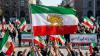 We Are Persian, Not Iranian: The Diaspora's Response to the Fall of the Islamic Republic
 $100 Solar Panel vs $100 Wind Turbine in a Normal Backyard
 "We Either Grow Or We Die, This Is The Turning Point, This Is Our Moment To Stand Up" – Ma
 Food Wars 2026: Cyberattacks on Global Supply Chain
Top Tech News
 The Pentagon is looking for the SpaceX of the ocean.
 Major milestone by 3D printing an artificial cornea using a specialized "bioink"...
 Scientists at Rice University have developed an exciting new two-dimensional carbon material...
 Footage recorded by hashtag#Meta's AI smart glasses is sent to offshore contractors...
 ELON MUSK: "With something like Neuralink… we effectively become maybe one with the AI."
 DARPA Launches New Program Generative Optogenetics, GO,...
 Anthropic Outpaces OpenAI Revenue 10X, Pentagon vs. Dario, Agents Rent Humans | #234
 Ordering a Tiny House from China, what's the real COST?
 New video may offer glimpse of secret F-47 fighter
 Donut Lab's Solid-State Battery Charges Fast. But Experts Still Have Questions



When Reagan (Wisely) Cut & Run From The Middle East After Marine Barracks Bombing
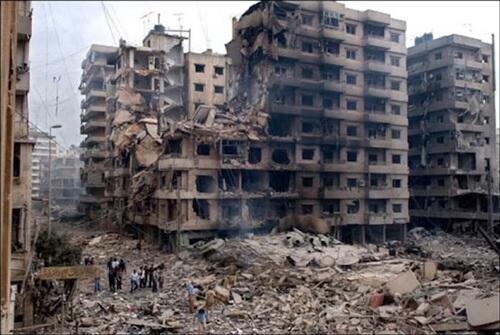
Secretary of War Pete Hegseth has invoked that attack numerous times. The 1983 Beirut barracks attack is one of the most cited and least understood pretexts for the new war with Iran.
That bombing was one of President Ronald Reagan's biggest foreign debacles. Lebanon had been wracked by a brutal civil war for seven years when, in June 1982, Israel invaded in order to crush the Palestinian Liberation Organization (PLO). US troops were briefly deployed in August 1982 in Beirut to help secure a ceasefire to facilitate the withdrawal of the PLO forces to Tunisia.
US troops exited Beirut after the PLO withdrawal was largely completed. However, in mid-September 1982, the massacre of more than seven hundred Palestinian refugees threatened to plunge Lebanon into total chaos. Lebanese Christian Phalangist militia butchered residents of the Sabra and Shatila refugee camps. The militia was armed, aided, and fed by the Israeli Defense Force, which surrounded and blockaded the camps.
The Lebanese government appealed to President Reagan to send American troops back to Beirut as a stabilizing factor, and Reagan quickly obliged. As fighting escalated between Christians, Muslims, Syrians, and Israelis in Lebanon, the original US peacekeeping mission became a farce. The US forces were training and equipping the Lebanese army, which was increasingly perceived as a pro-Christian, anti-Muslim force. (Most Lebanese were Muslim, though possibly a thin majority at that point.)
On April 18, 1983 a delivery van pulled up to the front door of the US embassy in Beirut and detonated, collapsing the building and killing forty-six people (including sixteen Americans) and wounding over a hundred others. The US embassy was a sitting duck for the terrorist assault: unlike many other U.S. embassies in hostile environments, it had no sturdy outer wall. Newsweek noted, "Delivery vehicles are supposed to go to the rear of the building. Why Lebanese police guarding the embassy driveway would have made an exception in the case of the black van remained a mystery." The attack lacked novelty value, since the Iraqi and French embassies had been wrecked by similar car bomb attacks in the preceding eighteen months.
Five days later, on April 23, 1983, Reagan announced to the press:
"The tragic and brutal attack on our embassy in Beirut has shocked us all and filled us with grief. Yet, because of this latest crime we are more resolved than ever to help achieve the urgent and total withdrawal of all American forces from Lebanon, or I should say, all foreign forces. I'm sorry. Mistake."
But the actual mistake was a US policy that would cost hundreds of Americans their lives.
By late summer 1983, the Marines were being targeted by Muslim snipers. Reagan administration officials seemed surprised at rising attacks on American soldiers. The Reagan administration responded to sniper potshots and scattered mortar attacks on US troops with a massive escalation. On September 13, Reagan authorized Marine commanders in Lebanon to call in air strikes and other attacks against the Muslims to help the Christian Lebanese army. Defense Secretary Caspar Weinberger vigorously opposed the new policy, fearing it would make American troops far more vulnerable. Navy ships repeatedly bombarded the Muslims over the next few weeks.